From a Life of Service and Adventure to Minimalist Living: Interview with Jiro of Sky Tea House
Sep 18, 2026
BY Kristian Robinson
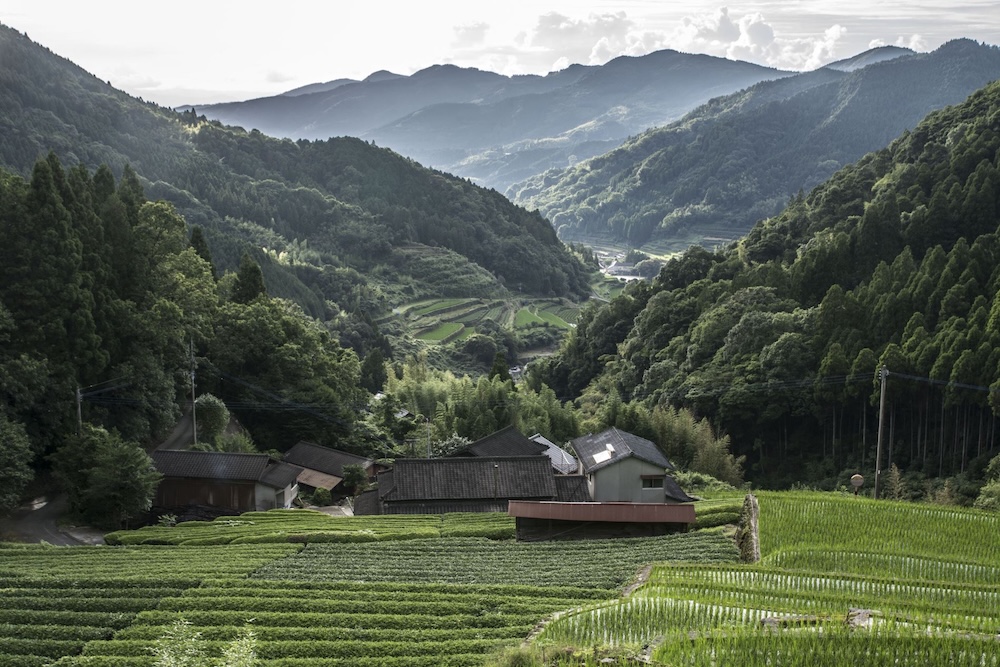
High in the tea-covered hills of Fukuoka, Kasahara Valley is celebrated as the home of Yamecha, one of Japan’s premier green teas. Overlooking these terraced slopes sits Sky Tea House (天空の茶屋敷), a renovated traditional farmhouse welcoming travelers from around the world.
The project is led by founder Jiro Sakamoto. After six years in the Japan Ground Self-Defense Force and five years backpacking across 66 countries, Sakamoto-san returned to Japan looking to build a space centered on simple living and human connection. When an abandoned farmstead in Kasahara was slated for demolition in 2016, he stepped in to save it, partnering with local residents and international volunteers to rebuild the site into an active community hub.
We sat down with Sakamoto-san to talk about his global travels, the restoration of the house, and what guests can experience during a stay in Kasahara Valley.
Sakamoto-san, welcome! To start off, could you introduce yourself and tell us a bit about Sky Tea House, and your journey leading up to the guest house’s establishment?
My name is Jiro Sakamoto, and I am the founder of Sky Tea House, a small guesthouse in the mountains of Yame, Fukuoka.
Before coming here, After six years in the Japan Ground Self-Defense Force, I spent around 2,000 days backpacking across 66 countries.
Through those experiences, I became less interested in owning things and more interested in freedom, meaningful experiences, and human connection. I came to believe that we can live happier lives by enjoying our relationships with others while respecting capitalism without allowing it to control every part of our lives. In 2015, I decided to settle in the Japanese countryside. Since my family roots are in Yame, I chose to make it my home.
The following year, I arrived in this small mountain village surrounded by tea fields. In 2016, I was offered an old abandoned farmhouse that would otherwise have been demolished. I decided to save it, even though I had little money and no professional construction experience.
With the support of local residents and people from around the world, we gradually restored the house.
That old farmhouse eventually became Sky Tea House.
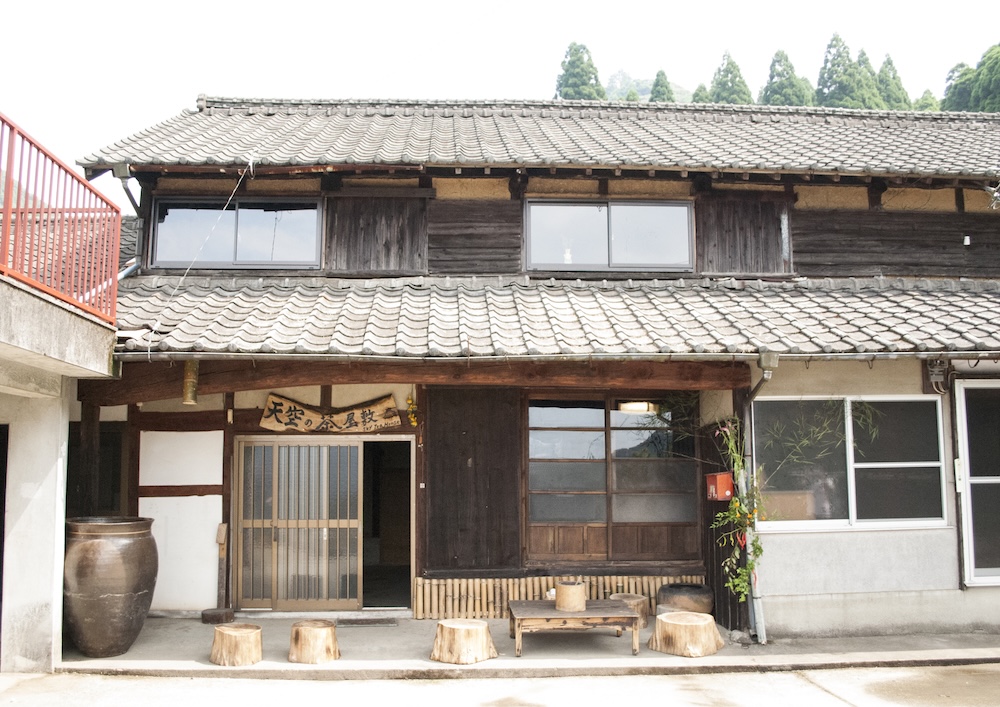
The old farmhouse (Sky Tea House) – Photo Credit: Sky Tea House
How did your background, from serving in the military to years of backpacking overseas, influence your decision to open a guesthouse back in Japan?
My six years in the military had a powerful influence on what came next. I often felt that I had to suppress my individuality, almost as if I had spent six years inside a cage. When I finally left, I reacted by throwing myself into the world. I wanted to go wherever I wished and challenge myself to do anything that interested me.
I traveled across continents by bicycle, sought out people I had always dreamed of meeting, and eventually returned to Japan on the Trans-Siberian Railway. In the far north, I worked as an aurora guide and dog-sled driver. I never attended an English language school; instead, I taught myself by speaking with people everywhere I went, including while living in poor neighborhoods and spending time with people on the streets.
In New Zealand, I also helped run a guesthouse in a place that looked almost like a castle on top of a hill.
During my travels, I experienced very different ways of life: working in the freezing far north, living in a place that felt like a castle, and sharing daily life with people who had almost nothing and lived on the streets. I also spoke with countless people around the world and encountered many different values, perspectives, and ways of living.
What I eventually realized was that life does not change as much as we might imagine simply because we live somewhere different. What matters most is not the place itself, but who we live with and how we choose to live.
That realization inspired a completely new challenge. I wanted to return to rural Japan, live on my own terms, create a home of my own, and build a place where people from different backgrounds could meet and connect. Sky Tea House grew from that decision.
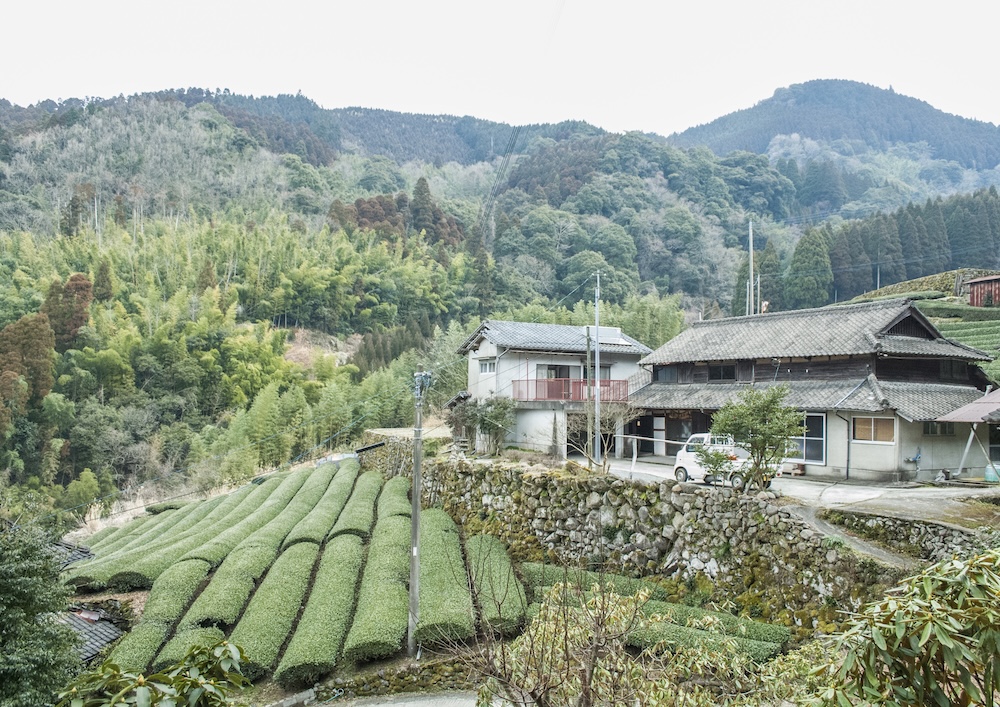
The rolling hills and a small patch of tea fields outside of the guest house – Photo Credit: Sky Tea House
How did you first discover Kasahara Valley, and what led you to choosing this as your location?
There was no grand reason behind it. I discovered Kasahara through personal connections, and one day an elderly man from the village offered me this old house.
That was really all it took. The elderly couple living next door were also incredibly kind, and for me, that was enough. I did not choose Kasahara because of a detailed business plan or because I had compared many locations. I chose it because of the people I met and the connection I felt with them.
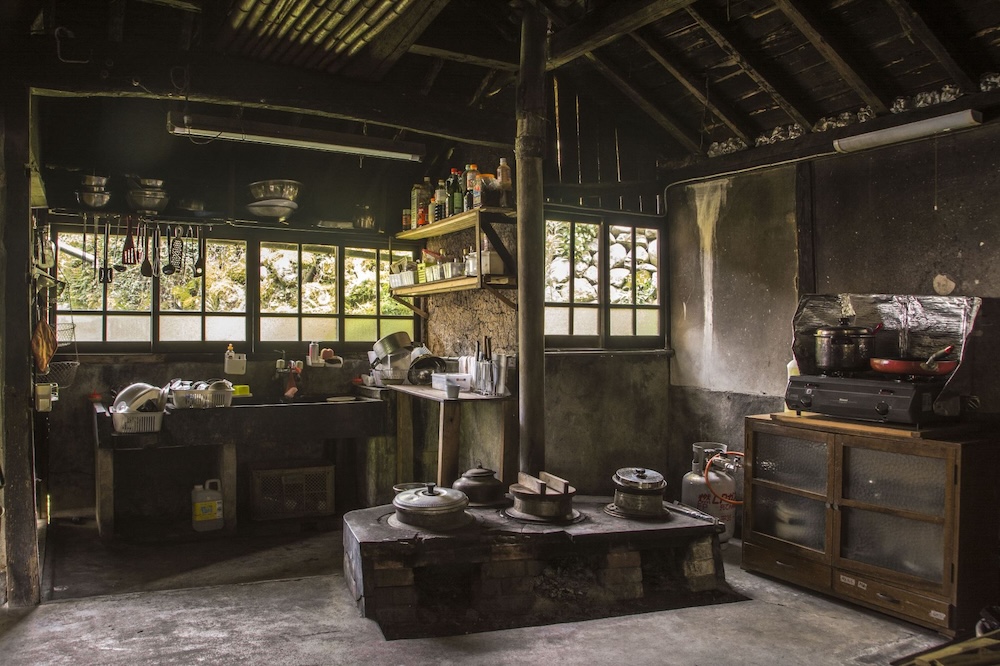
Sky Tea House’s traditional kitchen and stove – Photo Credit: Sky Tea House
The house was originally scheduled to be torn down back in 2016. What was it like restoring the building with the local community?
When I decided to take over the house, many people supported the project. At the time, the Japanese government had begun offering grants for rural community initiatives, so there was a favorable wind behind projects like ours.
A city official helped apply for funding by presenting it as a local community project. With that support, we hired a carpenter and carried out only the most essential repairs. The house was in very poor condition. There were holes in the building, and it had become a home for bats, insects, and other creatures.
I shared the project on social media, and many people found the idea interesting and came to help us clean and restore the house. In that sense, it gradually became a project shaped by many different people.
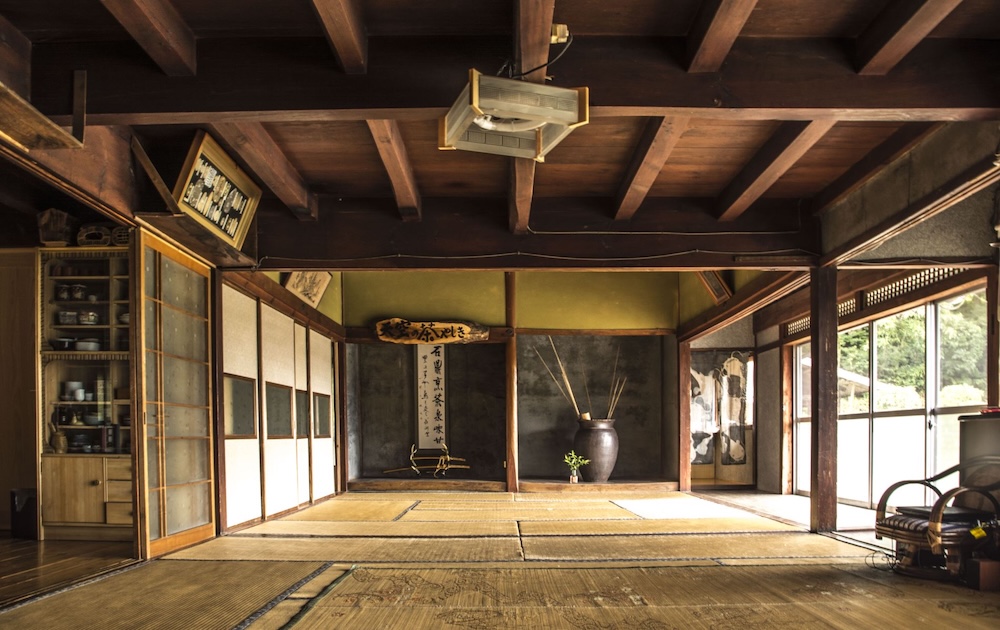
The large restored tatami room – Photo Credit: Sky Tea House
What can guests expect during a stay at Sky Tea House, and what are some of your favorite features of the property?
Guests can expect to stay in a rare old Japanese farmhouse of the kind that is quietly disappearing across the country. We have not over-renovated it or turned it into a polished, artificial version of traditional Japan. We use the house much as it is, preserving its age, imperfections, and original character.
The surroundings are extremely peaceful. At night, there is often little to hear except the sound of insects. In front of the house, there is a wide mountain view, and the sun sets directly before us. Tea fields surround the village, while a magnificent landscape of terraced rice fields stretches behind the house.
There is also a clear river nearby where guests can swim.
In summer, the mountain air is cool enough that we usually do not need air conditioning. We also hold outdoor movie nights almost every evening, watching films together under the open sky.
Winter is much simpler and quieter. We light the fireplace or gather around a bonfire, slow down, read books, and enjoy the stillness of the mountains.
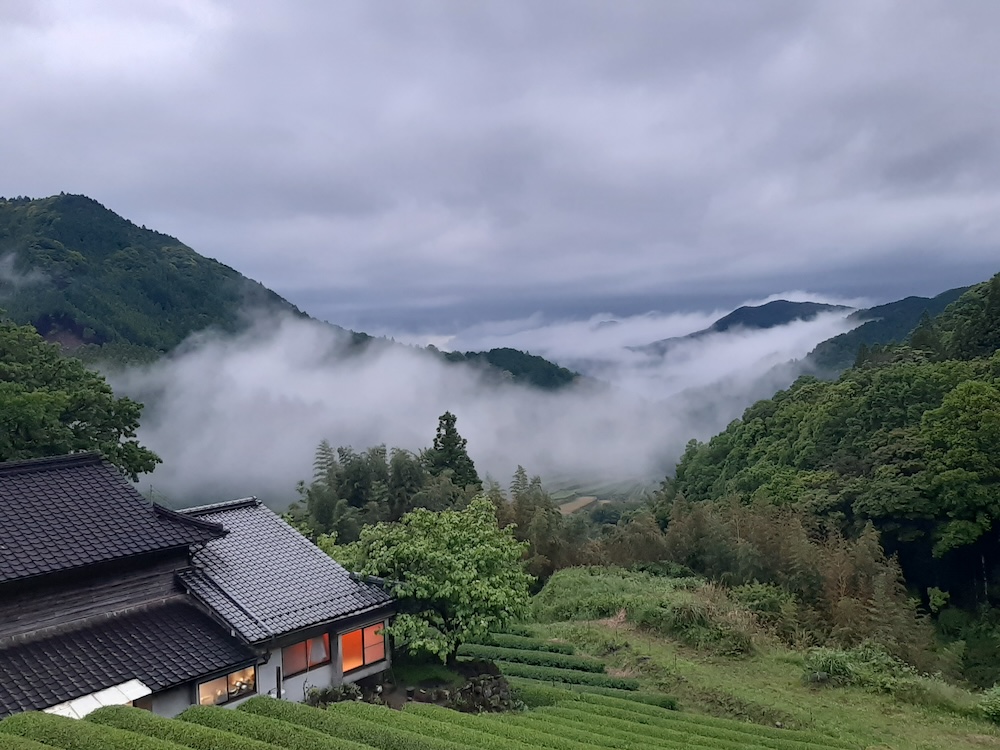
Fog rolling in down the mountain valley – Photo Credit: Sky Tea House
You host a wide range of visitors, from short-term travelers to digital nomads and volunteers. How would you describe the overall atmosphere of the stay?
My favorite feature may be the people who come here. Most of our guests are not looking for crowded sightseeing spots or the Japan that everyone already knows. They come in search of a more authentic side of the country.
Because people with that kind of curiosity gather here, the atmosphere is quite special. Guests naturally share meals, stories, and experiences, creating the friendly, international feeling of a hostel inside an old farmhouse in a remote Japanese village.
I am also part of that atmosphere. I am both an experienced traveler and a local resident involved in the tea industry, so I can connect the world of international travelers with everyday life in rural Yame. I think that combination is what makes the stay here so unusual.
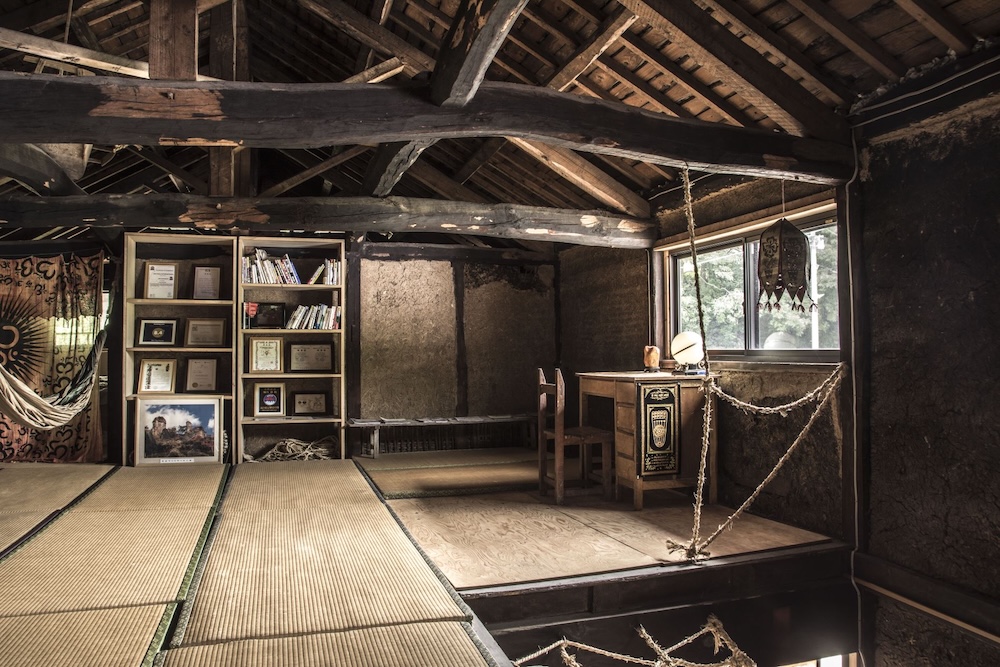
The upper floor with a small desk and hammock – Photo Credit: Sky Tea House
Green tea is such a huge part of life in Yame. How do you help people experience local tea culture and connect with the village?
I am also a tea farmer, so tea is not something we only explain to guests—it is part of daily life here.
Volunteers sometimes work with me in the tea fields, which gives them a direct experience of how tea is grown and cared for.
For visitors with limited time, I also offer full-day tea tours by car, introducing different parts of Yame and its tea culture. For guests staying at Sky Tea House, we can sometimes pick tea leaves together, hand-roll them, and make a small batch of tea that they can take home.
I want people to experience tea not only as a drink, but as something connected to the land, the seasons, and the people of the village.
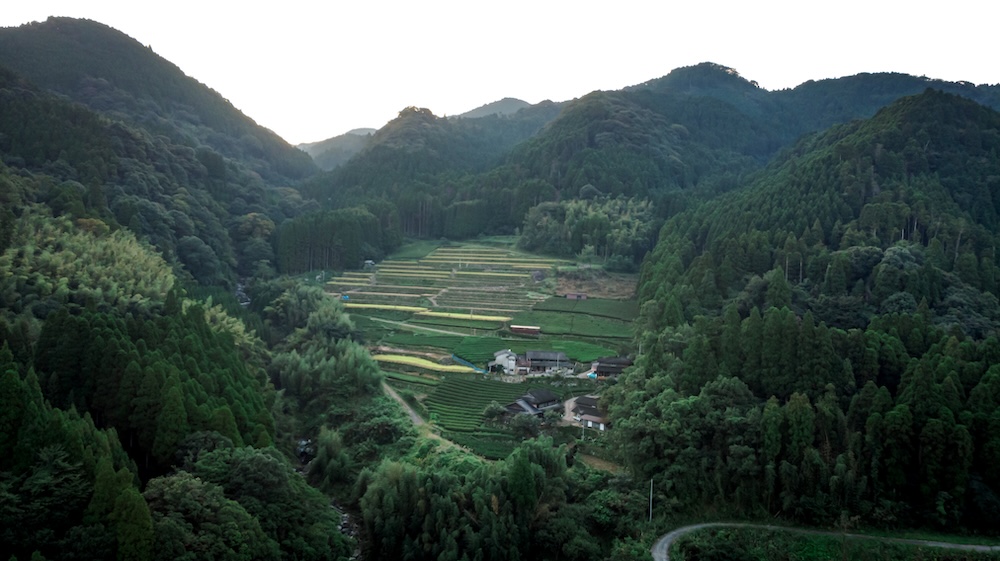
A greater view of the village and tea fields – Photo Credit: Sky Tea House
Beyond the house itself, what is there to explore or experience around Kasahara Valley?
Kasahara is not a place filled with conventional tourist attractions. What people can experience here is the landscape and everyday life of a quiet mountain village.
Visitors can walk through tea fields, explore the terraced rice fields behind the house, follow small mountain roads, and swim in the nearby river during the warmer months. Even a simple walk through the village can be special, because you may see farmers working, old wooden houses, small shrines, forests, and streams.
The experience also changes with the seasons. Spring is bright green with new tea leaves and full of colorful flowers, summer is vibrant green everywhere, perfect for swimming in the river, autumn brings beautiful mountain colors, and winter is extremely quiet.
For me, the best way to enjoy Kasahara is not to rush around looking for attractions. It is to walk slowly, notice the sounds and scenery, speak with local people when the opportunity comes, and experience a side of rural Japan that still feels connected to the land and the seasons.
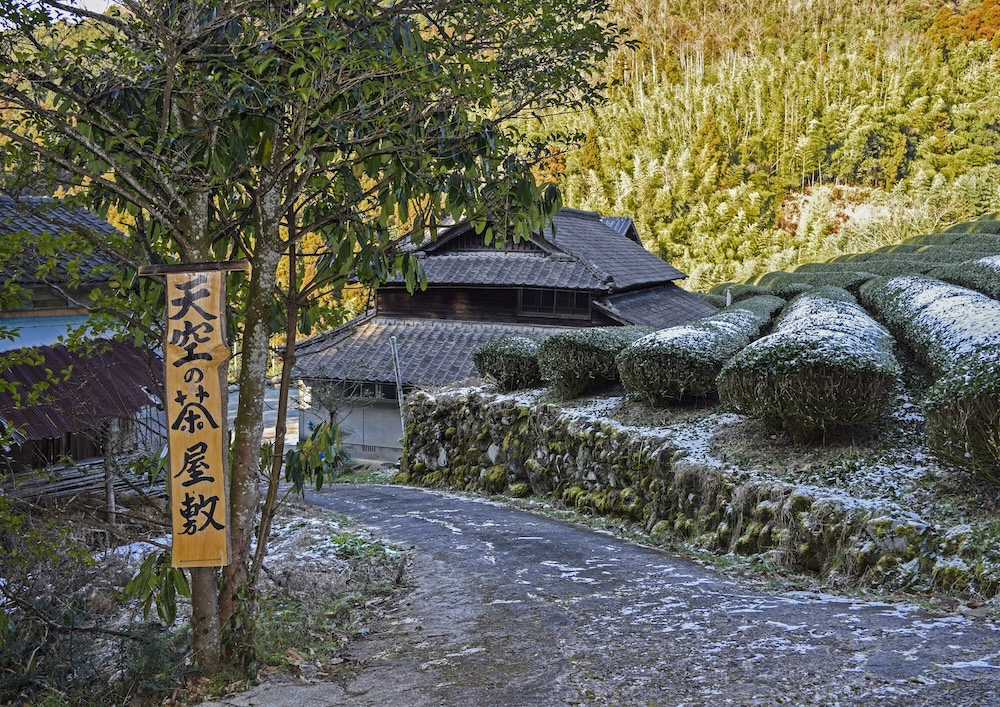
Tea bushes lightly dusted with frost and snow – Photo Credit: Sky Tea House
You are deeply involved in promoting Yame tea and supporting the local area. What drives your passion for this community?
What drives me is the feeling that this community gave me a place in the world.
The house was originally going to be demolished, and the elderly couple living next door had apparently planned to leave the village as well. They had already begun saying goodbye to the local community. But after I moved in, that plan quietly disappeared.
Some people say that I saved this house, and perhaps even helped the elderly man next door. But I believe the house and the village saved me far more than I saved them.
When I returned to Japan after years of traveling, I was 29 years old and had no clear place in society. Traveling around the world was not seen as a respectable career, and I did not know how to earn a living or build a stable life.
Then I was offered this house. I started with a very small project, gradually turned it into a sustainable business, and became a business owner. Over time, Sky Tea House was featured by the media, I was invited to give talks, I built a family, and I was eventually elected to serve on the Yame City Council.
So my passion for Yame tea and this community comes from gratitude. This place gave me a home, a livelihood, and a role in society. Promoting Yame and supporting the village is my way of giving something back.
People often say this house survived because of me. But when I look at how much my life changed after coming here, I feel that I am the one who was truly saved. Perhaps the house, the village, and all of us saved one another.
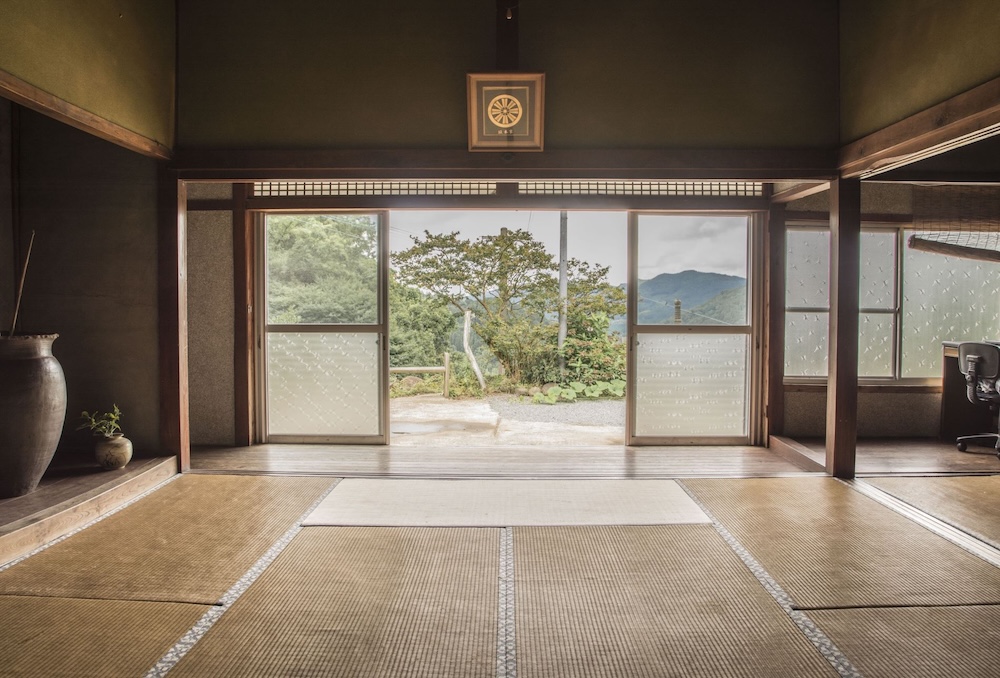
A view of the mountains from the tatami room – Photo Credit: Sky Tea House
Finally, for travelers planning a visit to the region, what are a few of your personal favorite spots or recommendations in Yame?
My personal recommendation is to experience Yame slowly rather than trying to visit too many places in one day.
I would recommend the Yame Central Tea Plantation for its wide views over the tea fields, and Reiganji Temple, which is closely connected to the history of Yame tea. The historic streets of Yame-Fukushima are also worth exploring, with their traditional white-walled buildings, small shops, cafés, and local crafts.
I also recommend visiting a local tea producer and taking the time to taste different kinds of Yame tea. Gyokuro is the most famous, but sencha, hojicha, and many other teas are also excellent.
However, my favorite experience is simply spending time in the countryside—walking through tea fields, talking with local people, swimming in the river in summer, and watching the sunset from the mountains.
Yame is not a place to rush through. Leave some empty space in your schedule, stay overnight if possible, and allow the region to reveal itself slowly.
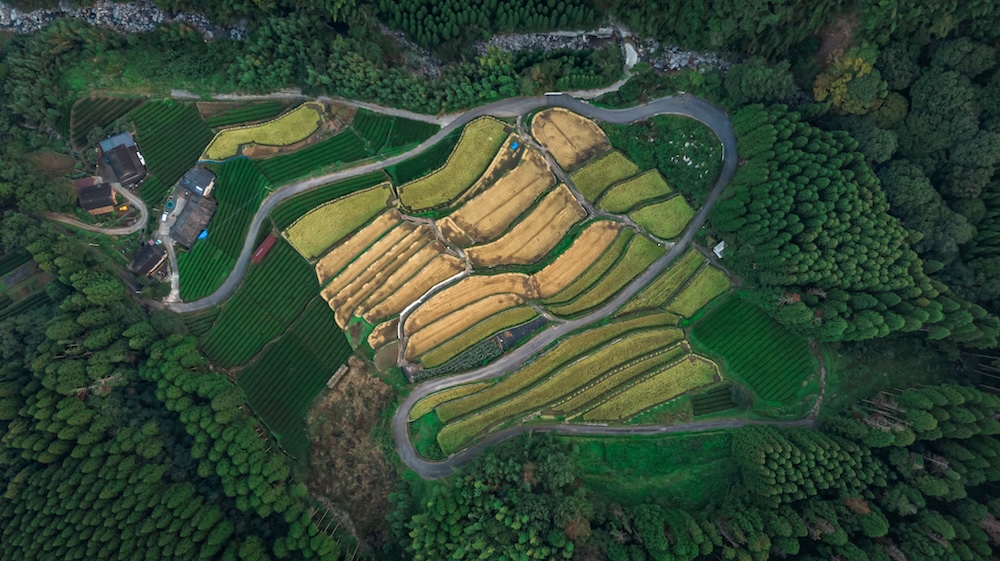
A final overhead shot of the tea farm – Photo Credit: Sky Tea House
Thank you, Sakamoto-san, for taking the time to share your story and open up the doors of Sky Tea House to us. In a fast-paced world, places like this remind us of the peace that comes with a simpler way of life. For travelers seeking a thoughtful blend of minimalism, authentic tea culture, and warm community, Kasahara Valley is a wonderful place to slow down and recharge.
Read more about Sky Tea House on:
Website: https://www.skyteahouse.com/en-home
Instagram: https://www.instagram.com/skyteahouse/?hl=en
Facebook: https://www.facebook.com/SkyTeaHouseYame/
Blog: https://en.skyteahouse.com/blog/categories/sky-tea-house-blog
YouTube: http://www.youtube.com/@skyteahouse9646
Featured Photo Credit: Sky Tea House
If Sakamoto-san’s story inspired you to slow down and explore a deeper side of Japan, click over to our Tailored Travel Page today so we can start designing your dream journey through Fukuoka and beyond!
Book your pocket wifi now to stay connected through your entire Japan Journey!

Be sure to get the JR Pass to make navigating Japan during your trip that much easier!
YOU MIGHT ALSO LIKE