Interview with Ally Hongo: A Storyteller, Entrepreneur, & Changemaker
Nov 6, 2026
BY Kristian Robinson
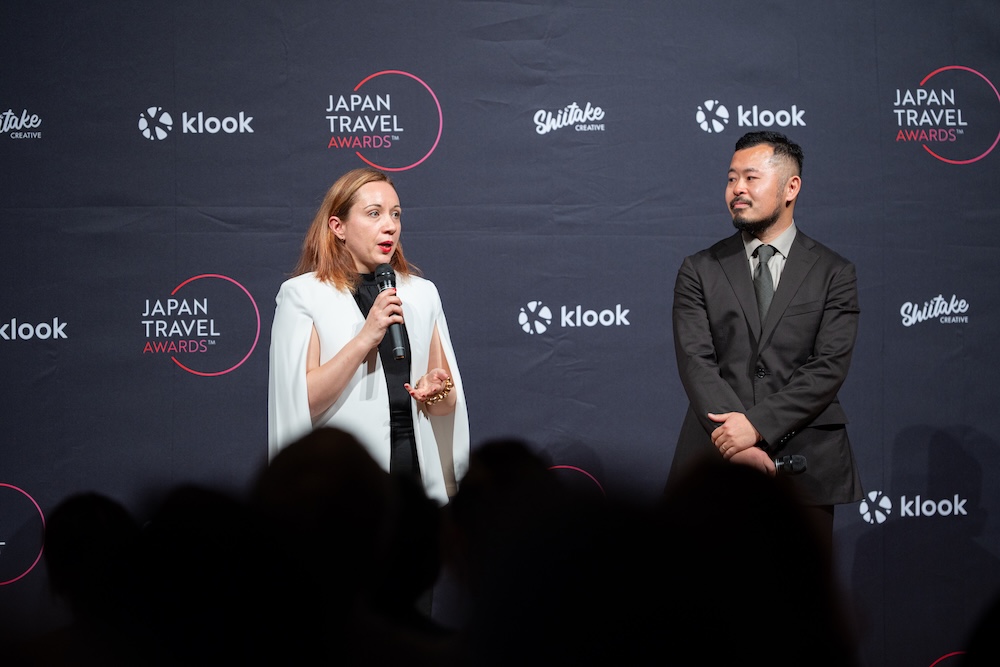
From interviewing Japan’s second female astronaut to launching The country’s first diversity-focused travel awards, Ally Hongo has spent a decade reshaping how the world engages with Japan. As former Editor-in-Chief of Savvy Tokyo and co-founder of both Shiitake Creative and the Japan Travel Awards, she bridges journalism, content strategy, and social impact. Most recently, she has channeled her expertise into her new book, 70 Remarkable Japanese Places.
In the following conversation, Ally pulls back the curtain on how her immigrant perspective fuels mission-driven storytelling and why she’s betting on tourism as a force for global change.
Could you please introduce yourself and tell us about your background? Please also share a little about your work as a writer, as well as what first inspired you to write focusing on Japan?
I was born and raised in Bulgaria and moved to Japan with my family when I was 15, back in 2001. I’ve lived, studied, and worked here ever since.
I always knew I wanted to work in media. I studied international relations at Temple University Japan, then went on to do a postgraduate degree in media and communication at Tokyo University.
My writing career started at The Mainichi, the English edition of Mainichi Shimbun, where I focused mostly on news coverage. From there, I became editor-in-chief of Savvy Tokyo, a web magazine for international women and families in Japan, covering everything from lifestyle to travel. After about five years there, I spent a year at Tokyo Weekender as digital content manager before co-founding my current company, Shiitake Creative and the Japan Travel Awards initiative, in 2021.
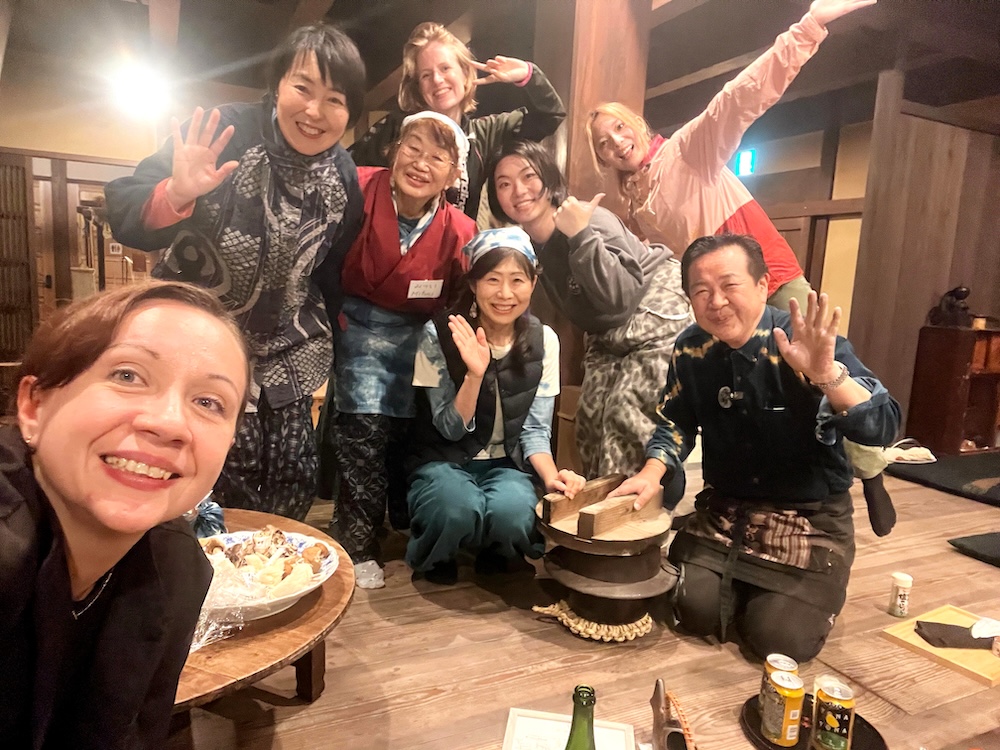
Ally with the Tsutaya owner and staff (Saku, Nagano Prefecture). Tsutaya is one the winners of the Japan Travel Awards’ Best Cultural Award of 2026 – Photo Credit: Ally Hongo
Interviewing remarkable people has been central to your career. Is there one conversation that particularly stayed with you?
I’ve long admired Naoko Yamazaki, Japan’s second woman to fly to space. I met her at an event in Tokyo years ago and immediately knew I wanted to sit down with her for a proper one-on-one. We eventually made it happen for an exclusive feature with Tokyo Weekender, where she also graced the cover.
The timing made the interview especially meaningful. It was early in the pandemic, when the world felt fractured, and the first wave of the Black Lives Matter movement was spreading across the US. I asked her to reflect on that sense of global insecurity from a few different angles: as someone who had faced isolation, gender barriers, and being the only Asian woman on her Discovery crew.
Her answer caught me off guard, in the best way. Rather than offering a sweeping ideal, she talked about something far more grounded. “Astronauts are all rivals,” she said. “Everyone wants to go to space earlier. But we know we must support each other, not only for the global good but for purely practical reasons: if we support each other, we can succeed in more missions, which means we can go to space sooner.” Space, she told me, teaches you equality, acceptance, resilience, patience — and gratitude for all those who collectively make it happen. She left me with a line that inspired our title: “The Earth is our spacecraft and we are all its members, each carrying their own unique role and responsibility.” We titled the cover “In Space We’re All Equal,” and it became one of the most memorable interviews of my career.
The second would be with the legendary fashion icon Yumi Katsura, who sadly passed away two years ago. I was incredibly nervous going into that one. She turned out to be so softly spoken and generous with her time that we ended up talking for hours. She walked me through her remarkable life and career, through turbulent social change, unwavering ambition, and boundless creativity. She transformed Japan’s bridal industry with grace and determination, and she became one of the quiet mentors of my career. That conversation taught me something I’ve carried ever since: the two things you never compromise on are love for your craft and quality. The two are inseparable.
Both Katsura and Yamazaki made extraordinary contributions to Japan and to their industries. But what I remember most is how their faces lit up when they spoke about their work, as if it wasn’t “work” at all. That kind of genuine passion is unforgettable.
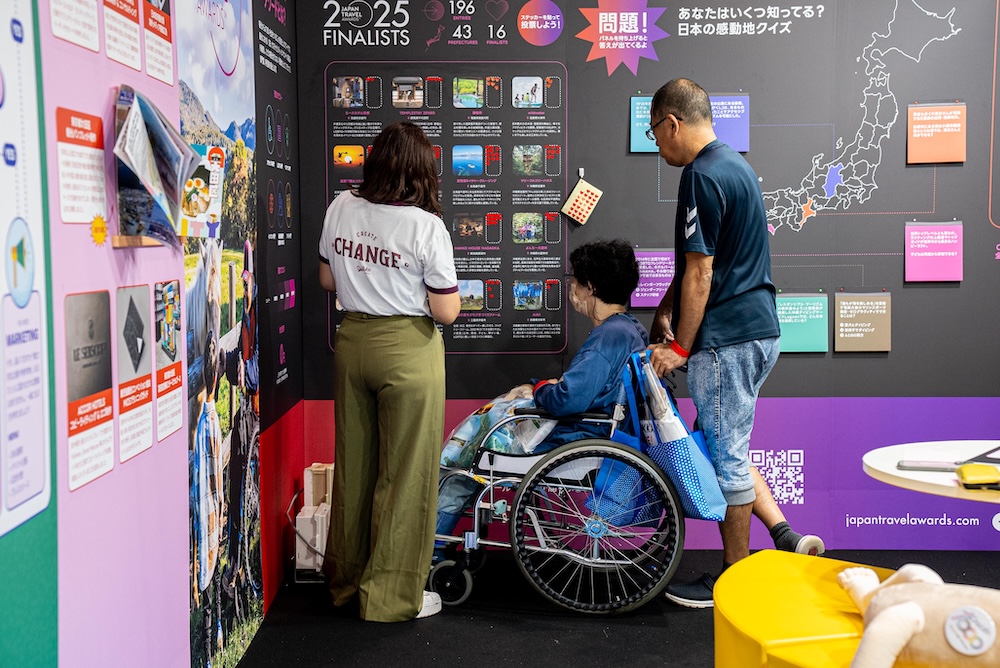
Ally guiding visitors at the Shiitake Creative & Japan Travel Awards booth at the Tourism Expo 2024 – Photo Credit: Ally Hongo
What inspired you to create the Japan Travel Awards, and could you tell our readers what they are exactly?
The Japan Travel Awards is a non-profit annual travel competition designed to spotlight outstanding places throughout Japan that contribute to the greater good through travel. That includes places focused on inclusive travel, sustainable travel, or those with genuinely creative ideas and purposes that positively impact both travelers and local communities, regardless of the size of the business.
We launched during the pandemic, when travel had come to a complete standstill, and we wanted to do something that could lift the industry. Coming from a media and advertising background, we were also very aware that many exceptional places simply don’t have the budget to enter travel competitions, even though the recognition and visibility that an award can bring is enormous. And we knew that Japan has so many extraordinary travel destinations that rarely get attention, especially internationally. So we set out to build a platform that addressed all of this: one that allows travel businesses of any size or marketing budget to showcase their work, compete fairly, and get recognized, with a specific focus on inclusive travel that Japan wasn’t yet talking about much. That was the beginning of the Japan Travel Awards.
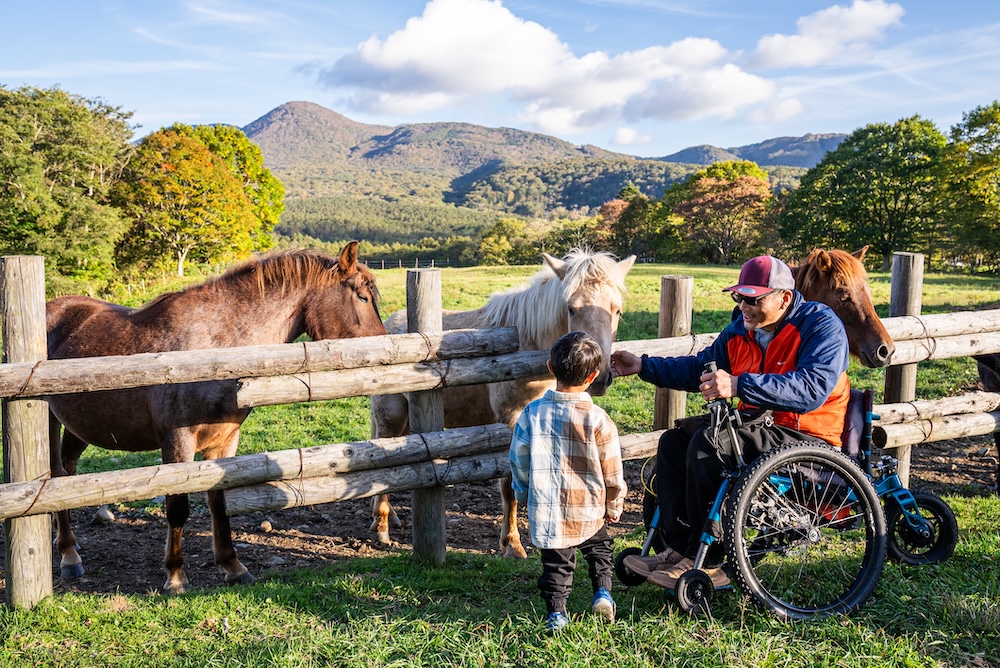
During a visit to Togakushi, one of Japan Travel Awards winners for Accessible Travel in 2024 – Photo Credit: Ally Hongo
What are some of the categories that qualify a business for the Japan Travel Awards?
The Awards are free for anyone to apply. The only two conditions are that the business be based in Japan and that it’s an actual place travelers can physically visit or experience. So any travel business offering accommodations, tours, activities, or related services is eligible.
Our core categories are Sustainable Travel, Accessible Travel, LGBTQ+ Travel, Inbound Travel, and the Grand Prix. Each year we also give out special recognition awards that highlight a particular standout we discovered along the way, such as Best Cultural Travel, Best Social Impact, and Best Tourism Development.
Through your work, have you noticed significant changes in Japan regarding diversity, inclusion, and sustainability?
Definitely, and the growth of the Awards reflects it. We started with 80 applications in 2021, and that number grew to 206 in 2025. Our first offline ceremony had around 80 guests. The following year, nearly 200 attended, and this year there wasn’t an empty seat in the room. It wasn’t just winners showing up either. People from across the travel sector came specifically to learn about the Awards and to learn from each other. That shift says a lot about where Japan’s travel industry is heading.
The Awards application form asks detailed questions about each business’s approach to diverse travelers, and many applicants have told us that simply filling it out was a revelation. They realized which areas they needed to work on. Something as small as adding “other” to a gender field on a booking form, or removing it entirely, can send a powerful signal to guests that they are welcome. Similarly, including accessibility information on a website helps travelers with disabilities assess, on their own terms and at their own pace, whether a destination works for them.
By showcasing destinations that are being recognized for doing this well, we’re gradually seeing a mindset shift among travel operators. They’re starting to understand both the social importance and the business case for being more inclusive. Former finalists and winners are now reaching out to each other for advice, with hotels inviting accessibility award winners to visit and give feedback. Others are starting to offer inclusive tours or making small but meaningful changes, like making their sustainable or inclusive policies visible on their websites and social channels.
We’re also noticing a shift in how the media covers travel in Japan. For a long time, most outlets focused on destinations that showcased the “beauty of Japan” and its spirit of omotenashi. But one of the most widely covered places in the entire history of the Japan Travel Awards is Wildwater, a one-man-run accessible tour on Lake Biwa. That feels like real progress.
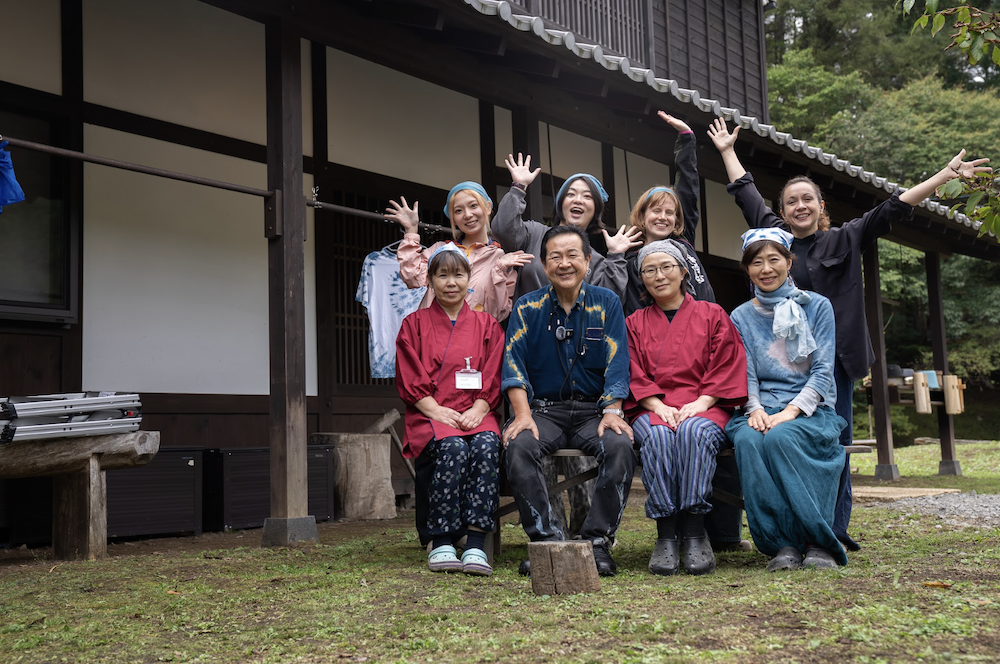
Ally with the lovely people of Cultural Villa Tsutaya in Saku, Nagano Prefecture – Photo Credit: Ally Hongo
You’ve just released 70 Remarkable Japanese Places. For those new to your work, could you introduce the book and tell us what inspired you to turn the Japan Travel Awards’ insights into a physical collection?
70 Remarkable Japanese Places is a compilation of our favorite discoveries from the first three years of the Japan Travel Awards. It’s a 200-page coffee-table book featuring 70 places from across the country, each documented through original photography and destination-inspired illustrations. The stories are told in both English and Japanese, with the text tailored to each readership rather than simply translated.
We wanted to bring all of these places together in one physical object that could be shared and passed on anywhere in the world. Something you’d give to a friend who misses Japan, someone planning their first trip, or anyone who simply wants a beautiful reminder of their travels here.

Ally and team with the book – Photo Credit: Ally Hongo
The book focuses on “inclusive, sustainable, and offbeat” destinations. For someone who has seen it all, how did you narrow down the list to these specific 70 locations?
Honestly, with great difficulty. The book was originally supposed to cover just the first year of our travels for the Awards. But the more we explored, the more places I wanted to include. After what felt like the millionth time I told our designer “I want to add another spread,” he put his foot down and said we needed to draw a line somewhere or this book would never actually exist. So we settled on the first three years, and we’re already saving the rest for the next edition when the time is right.
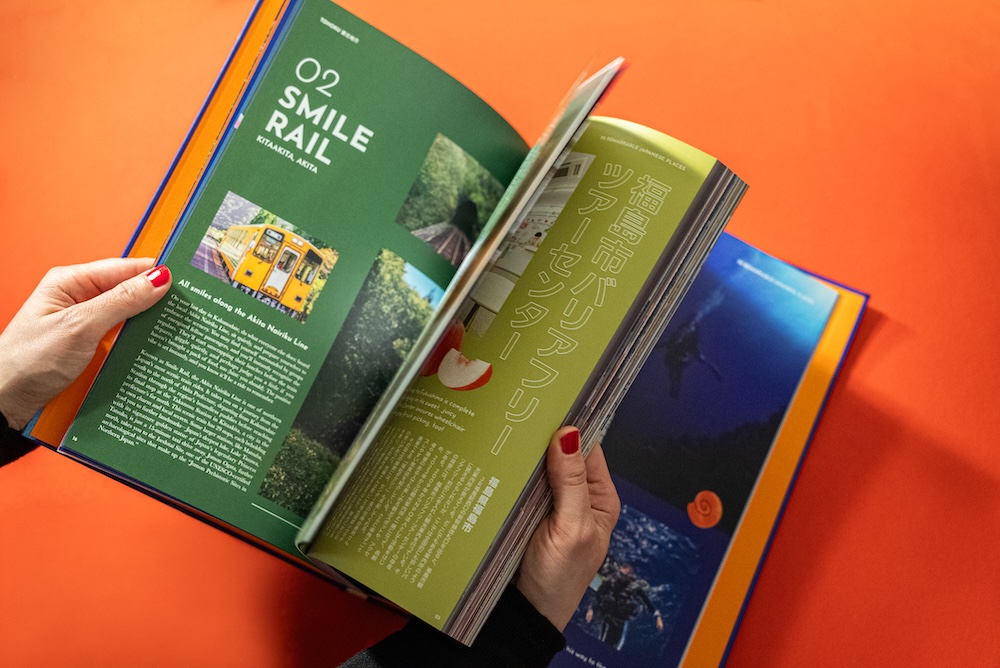
70 Remarkable Japanese Places spread – Photo Credit: Ally Hongo
After all these years, and after documenting these unique spots, what still surprises you about Japan?
How much more diverse Japan is than it gets credit for, and how little of that diversity is concentrated in the major cities. It’s actually in the quieter, less-visited corners of the country where some of the most inclusive and forward-thinking places exist. The most accessible ryokan we’ve come across is in Shimane. The only wheelchair-accessible diving facility with dedicated accommodation is in Amami Oshima. The first LGBTQ+-friendly kimono rental shop we discovered was in Aichi.
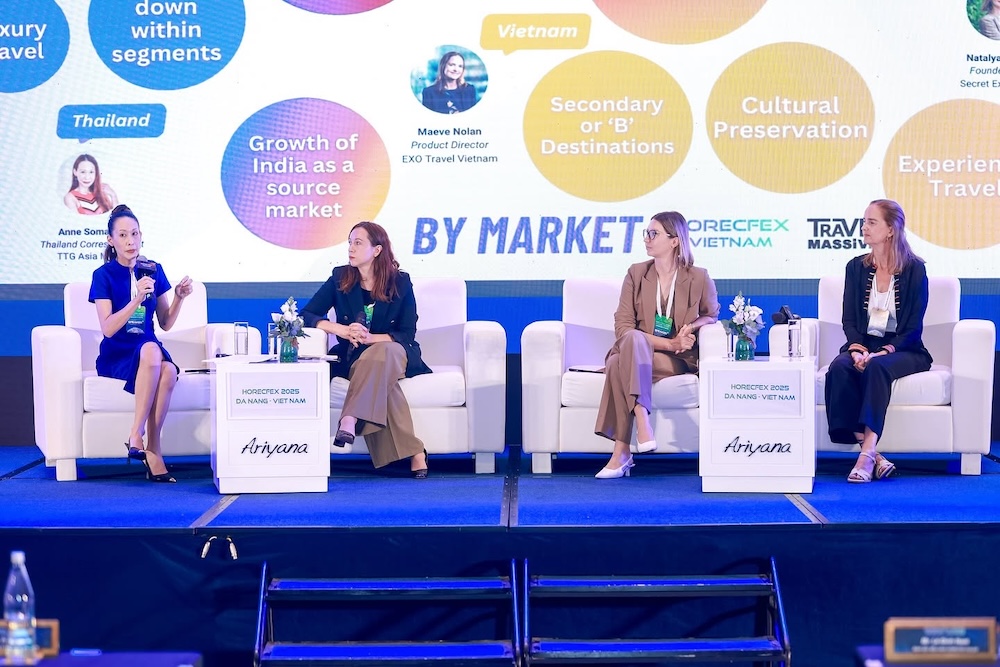
Speaking at the Travel Massive conference at Da Nang, Vietnam in August 2025 – Photo Credit: Ally Hongo
Are there any future projects you’re currently working on that you could tell us more about here?
We’re constantly looking at ways to expand the reach of the Japan Travel Awards and build an even stronger platform for businesses in the industry to connect through it. Last year we ran a Japan Travel Forum alongside the Awards ceremony, and next year we’re hoping to scale that into a much larger event that brings together more voices from across the travel sector for the exchange of ideas and expertise. We’re currently putting together a business plan and in conversation with potential partners and sponsors to make it happen.
Lastly, is there anything else you’d like to share with our readers?
Some of the most memorable experiences you’ll have in Japan will be the subtle ones. Listening to the owner of a rural soba restaurant in Tokushima sing softly as you eat. Planting coral seeds in the Okinawan sea alongside guides who become your friends. Wearing a genderless wedding kimono in a small Buddhist temple inn in Yamanashi. Discovering how a distant memory of a tempura dish shaped a long-running confectionery in central Tokyo.
These experiences exist, and the people behind them are genuinely excited to welcome you. So keep looking beyond the big cities. You’ll be amazed at how wonderfully diverse and unexpected Japan truly is.
Thank you, Ally, for sharing your insights. Your work reveals how storytelling acts as a catalyst for change. Through the Japan Travel Awards and Shiitake Creative, you’re not just documenting Japan’s evolution; you’re shaping it. We encourage readers to pick up 70 Remarkable Japanese Places and follow Ally’s mission to create a more inclusive, sustainable future for travel in Japan.
Follow Ally Hongo on:
Website: https://www.allyhongo.com/
Japan Travel Awards: https://japantravelawards.com/en/home
Link to her book: https://japantravelawards.com/70RemarkableJapanesePlaces
Instagram:
(Ally) https://www.instagram.com/aaallyh/
(Japan Travel Awards) https://www.instagram.com/japantravelawards/
(Shiitake Creative) https://www.instagram.com/shiitakecreative/
LinkedIn: https://www.linkedin.com/in/ally-hongo-295435139/
Featured Photo Credit: Ally Hongo
Check out Ally’s inspiring work and grab your copy of 70 Remarkable Japanese Places to discover the country’s best inclusive hidden gems. Then, let our experts custom-plan your Japan itinerary to seamlessly weave these sustainable, offbeat destinations into your next journey!
Book your pocket wifi now to stay connected through your entire Japan Journey!

Be sure to get the JR Pass to make navigating Japan during your trip that much easier!
YOU MIGHT ALSO LIKE