JAPANESE SUMMER FESTIVAL GAMES THAT EVERYONE CAN ENJOY
Jul 9, 2026
BY Maria Diaz

Summer is one of the most anticipated times of the year in Japan, filled with sweet treats like ice cream, refreshing seasonal foods, and, above all, vibrant and traditional festivals that bring communities together. Many of these celebrations end with stunning fireworks lighting up the night sky, creating moments that feel almost magical. If you’re an anime fan, this scene will probably feel very familiar, as summer festivals are often beautifully portrayed as some of the most nostalgic and memorable moments of the season.
As the sun begins to set and the evening air cools, festival streets transform into glowing pathways lined with lanterns, food stalls, and the cheerful sounds of music and laughter. People walk around in colorful yukata, friends gather, families spend time together, and there’s a shared sense of excitement everywhere you look. While the delicious street food and spectacular fireworks often take center stage, it’s the traditional festival games that truly capture the spirit of these events. They are simple, nostalgic, and designed for everyone to enjoy, no matter your age. So join us in today’s blog as we explore some of these fun and traditional festival games.
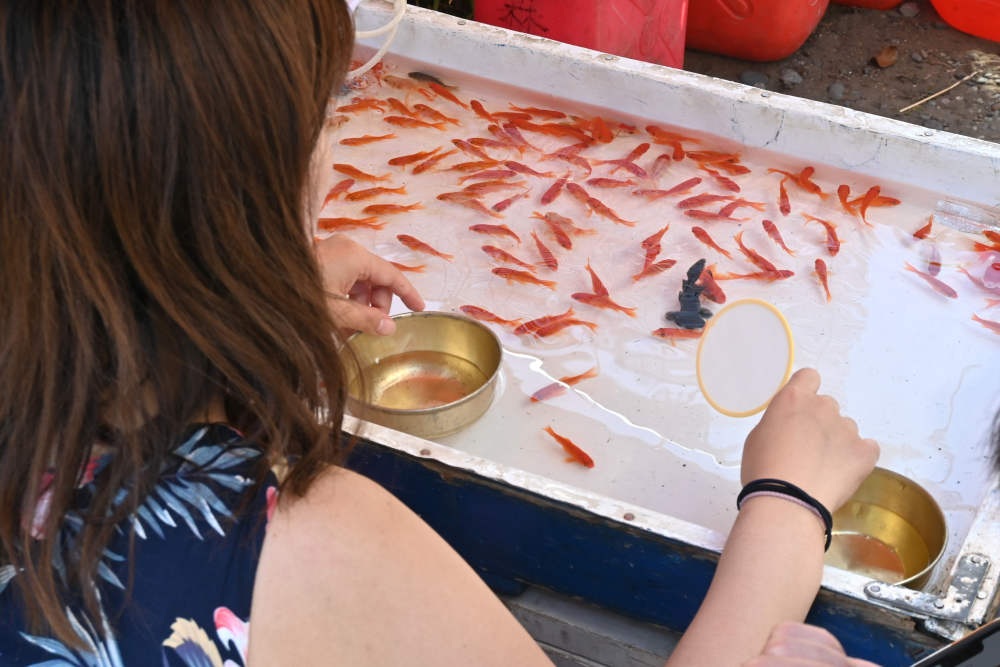
Woman trying to catch a goldfish – Photo Credit: tamu1500
Kingyo Sukui
One of the most iconic and beloved games is goldfish scooping, known as kingyo sukui. At first glance, it looks easy (spoiler: it’s not!). You’re given a small scooper made of thin paper and asked to catch goldfish swimming in a shallow tank. But within seconds, you realize how delicate the paper is. One wrong move and it breaks, sending your chance swimming away. The trick is to move slowly and gently, almost as if you’re dancing with the water. It’s this balance of patience, skill, and a bit of luck that makes the game so addictive. Even if you manage to catch one fish or none at all, people often find themselves wanting to try again and again. And if you do succeed, you may even get to take your goldfish home as a prize.
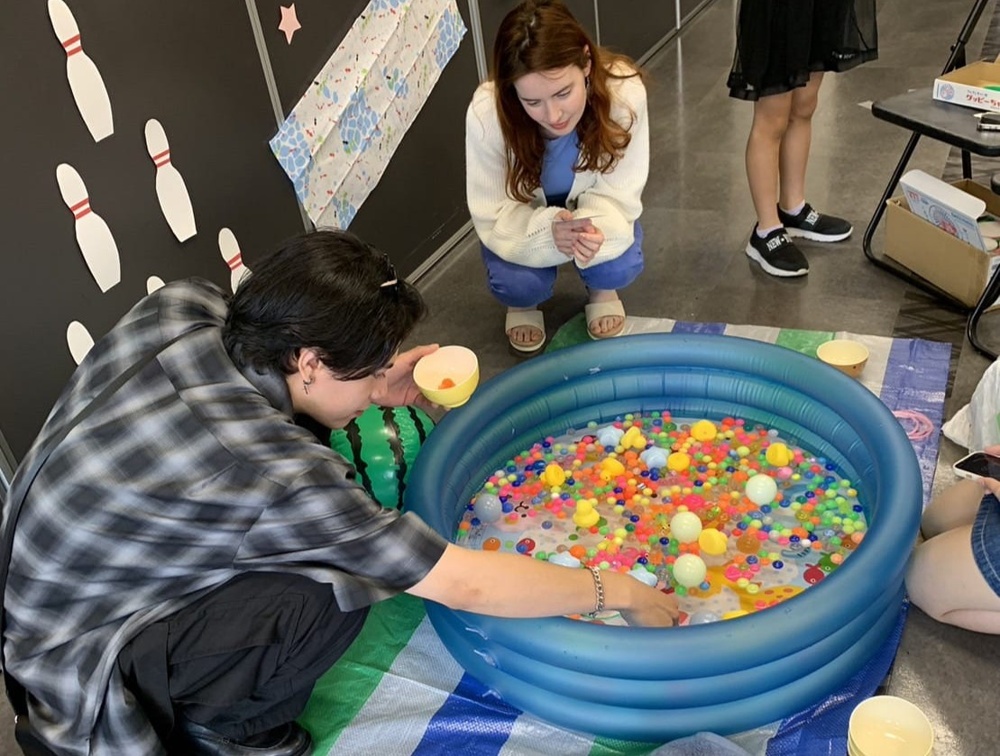
My friend and I are playing ball scooping – Photo Credit: Maria Díaz
Ball Scooping
A more modern addition to festival games is Super Ball Scooping. Similar to goldfish scooping, this game replaces fish with small, colorful rubber balls that float and bounce. They’re easier to catch, which makes the game less stressful and more playful. The bright colors and cheerful atmosphere make it especially appealing to younger players, but it’s just as enjoyable for adults who want a lighter challenge. It’s proof that festival traditions can evolve while still keeping their original spirit alive.
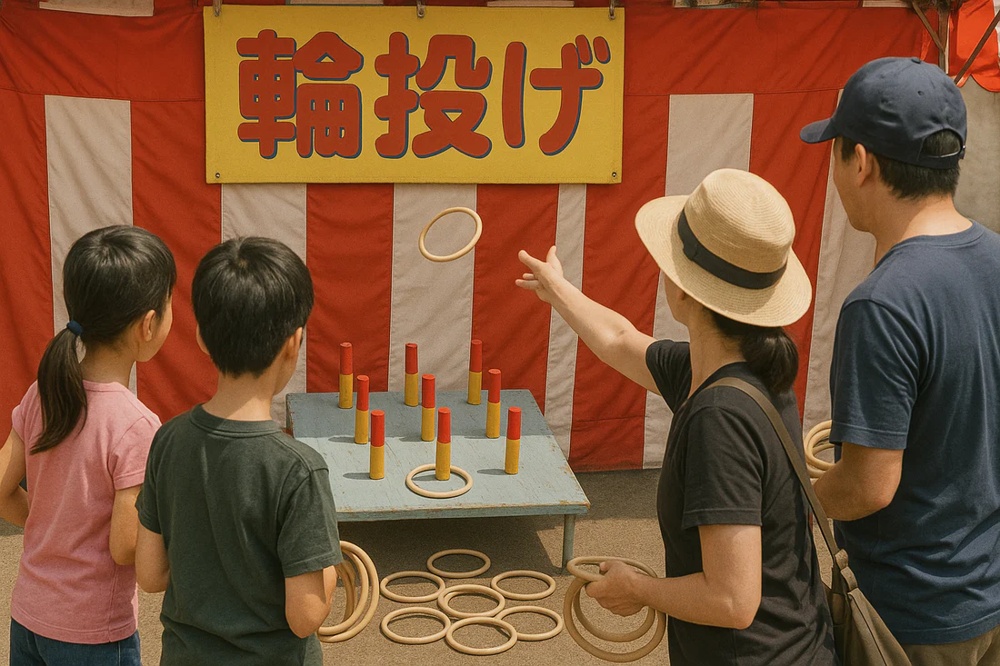
Family playing wanage at a festival stall – Photo Credit: Tuloop
Wanage
Not far from there, you’ll usually find a wanage stall, or ring toss game. This one is instantly familiar, even if you’ve never been to Japan before. A variety of prizes like snacks, toys, or cute little souvenirs, are neatly arranged, and your goal is to toss rings so they land perfectly around them. It sounds simple, but that small distance and slight bounce of the ring make it more challenging than expected. What makes wanage so enjoyable is how quick and inclusive it is. Kids, teenagers, and adults all gather around, laughing, cheering, and sometimes groaning when the ring narrowly misses its target. And when it finally lands just right, there’s a small but satisfying burst of triumph.
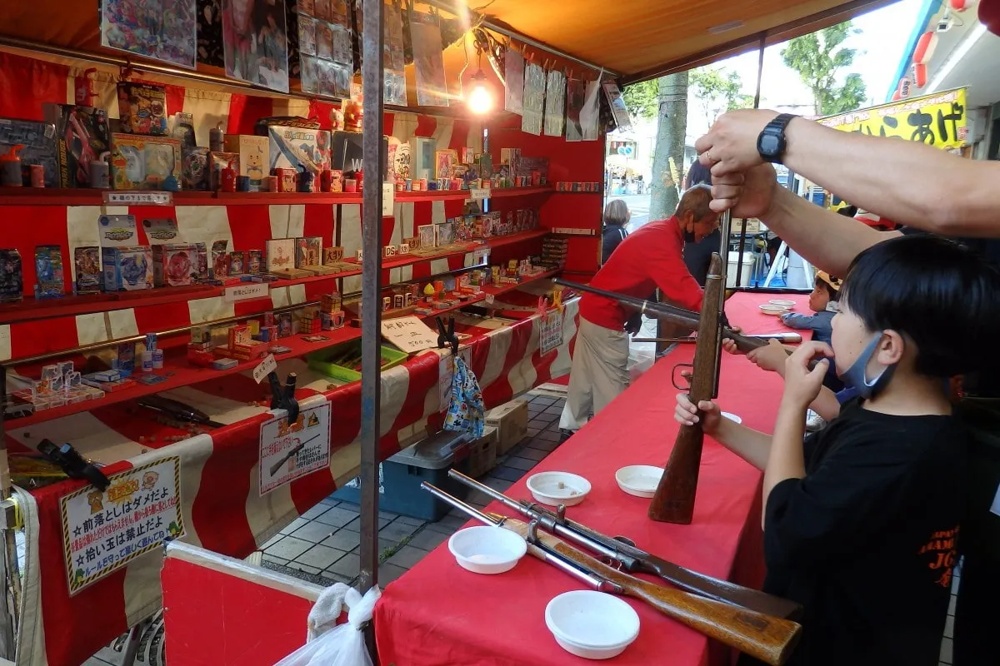
Family playing Shateki – Photo Credit: Yokosuka
Shateki
For those who prefer something a bit more action-packed, there’s shateki, the cork gun shooting game. This stall often draws a crowd, with rows of prizes carefully lined up, waiting to be knocked down. Armed with a toy gun that shoots cork bullets, players take aim and try to hit their targets. It may seem straightforward, but the guns often have their own quirks, making accuracy a fun challenge. There’s something deeply satisfying about watching a prize wobble and fall after a well-placed shot. It taps into a playful, competitive side and brings out a sense of determination, even in people who didn’t expect to care that much.
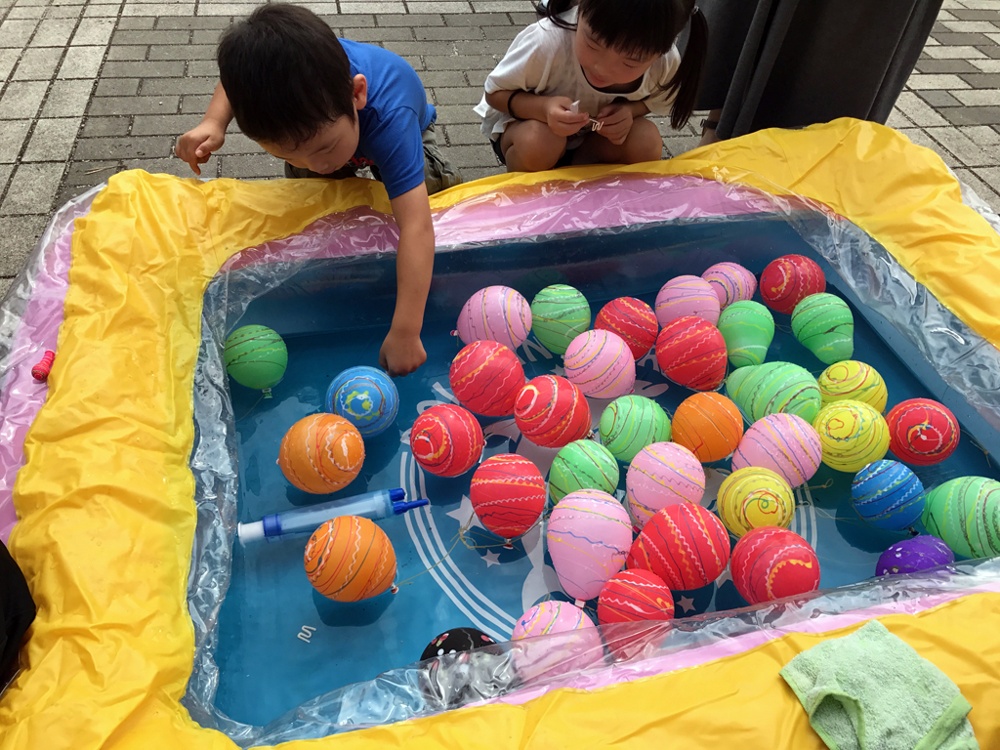
Children playing yo-yo tsuri – Photo Credit: Nagaoka Toso
Yo-yo Tsuri
On the softer and more colorful side, you’ll find yo-yo tsuri, or yo-yo fishing. Instead of fish, the water is filled with bright, bouncy balloons tied with rubber strings. Using a small hook attached to a fragile paper string, you try to lift one out without breaking it. The balloons bob gently in the water, making them both tempting and tricky to catch. This game has a light, summery feel to it, with its vibrant colors and relaxed pace. It’s especially popular with children, but adults often get drawn in by its charm as well. There’s something oddly soothing about it, even as you concentrate on not snapping the string.
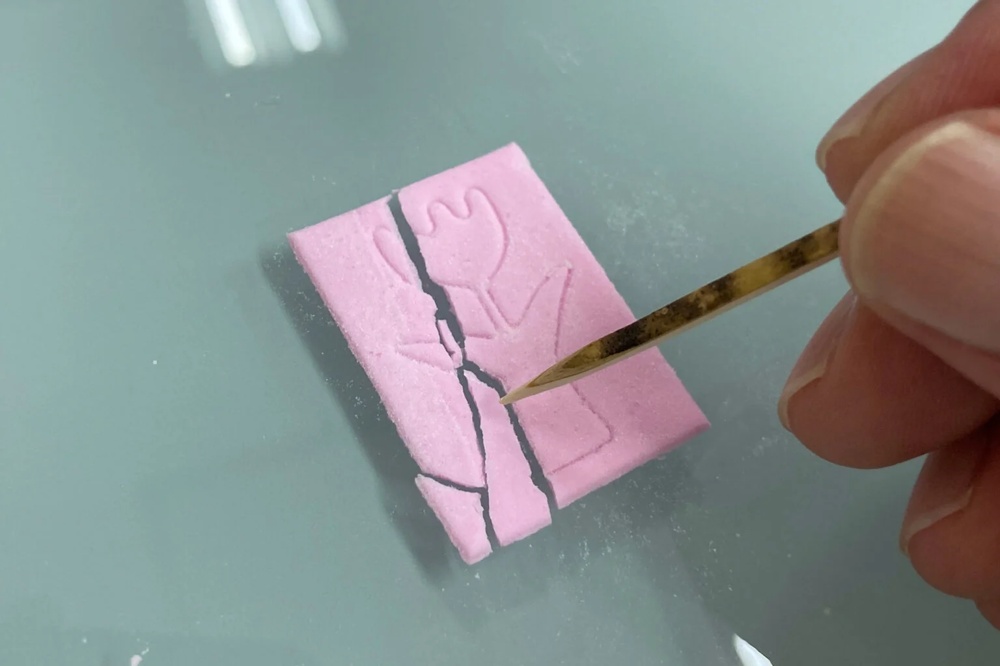
Cracked katanuki candy – Photo Credit: Oh Laser
Katanuki
If you wander a little further, you might come across katanuki, a quieter but surprisingly intense game. Here, instead of water or movement, the challenge lies in precision. Players are given a thin sheet of candy with a delicate shape imprinted on it, along with a small tool to carve it out. The goal is to carefully cut along the lines without breaking the shape. It requires a steady hand, focus, and a lot of patience. You might find it familiar, but no, it’s not a Korean game from Squid Game. Many similar candy-cutting games exist across East Asia, each with its own variation, and katanuki is one of them.
The atmosphere around this stall is noticeably different: more hushed, with players leaning in closely, fully absorbed in the task. It’s a refreshing change of pace and offers a different kind of satisfaction when you succeed.
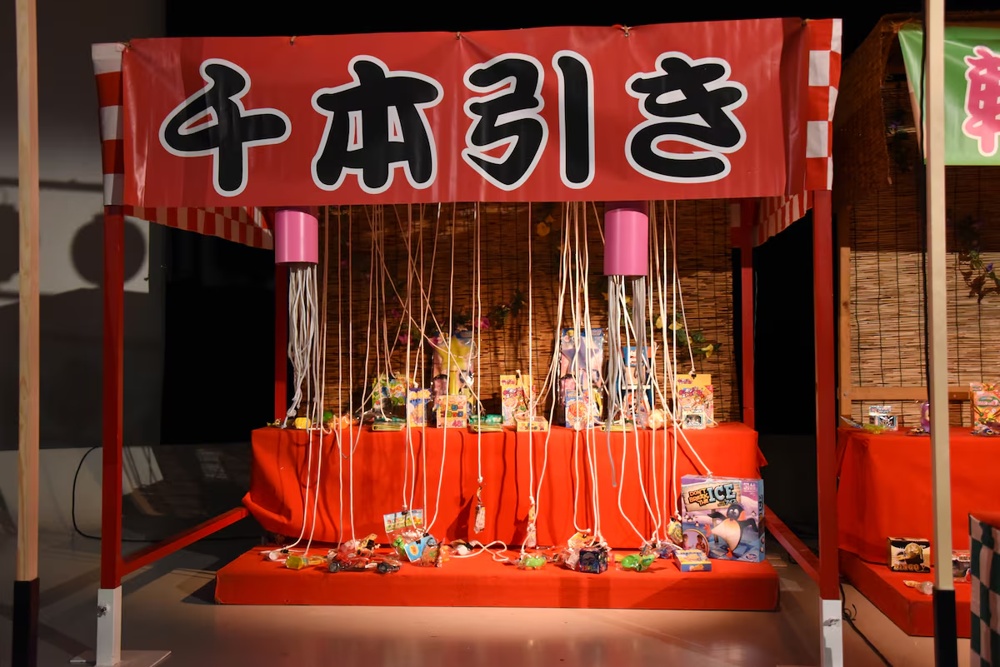
Senbonbiki game – Photo Credit: Natalie
Senbonbiki
Senbonbiki is one of the most exciting and mysterious games you’ll find at a Japanese summer festival. At first glance, it looks simple: a row of strings hangs from a stand, and each one is secretly tied to a hidden prize. Players choose a string and pull, never knowing what they’ll get until the very end. The prizes can range from small candies to surprisingly big toys, which adds to the thrill. It’s not about skill, but about luck and anticipation, and that moment of pulling the string is full of suspense. Whether you win something big or small, senbonbiki captures that playful, childlike excitement that makes festival games so memorable.
As the night winds down and the festival lights begin to fade, what stays with you are the small, joyful moments, laughing over a missed shot, concentrating on a simple game, or celebrating a tiny win. These festival games may be simple, but they bring people together in the most genuine way. Japanese summer festivals remind us that the best memories often come from the simplest experiences. So if you ever find yourself at a natsu matsuri, don’t just watch, join in. You might leave with a small prize, but you’ll definitely leave with a smile.
Featured Photo Credit: miya227
For more uniquely Japanese summertime experiences across the country, check out our list of Recommended Summer Tours and start planning your next adventure in the hotter months!
PIN THIS FOR LATER
0
shares
Book your pocket wifi now to stay connected through your entire Japan Journey!

Be sure to get the JR Pass to make navigating Japan during your trip that much easier!
YOU MIGHT ALSO LIKE