ODA NOBUNAGA: THE GREAT UNIFIER
Sep 21, 2026
BY Maria Diaz
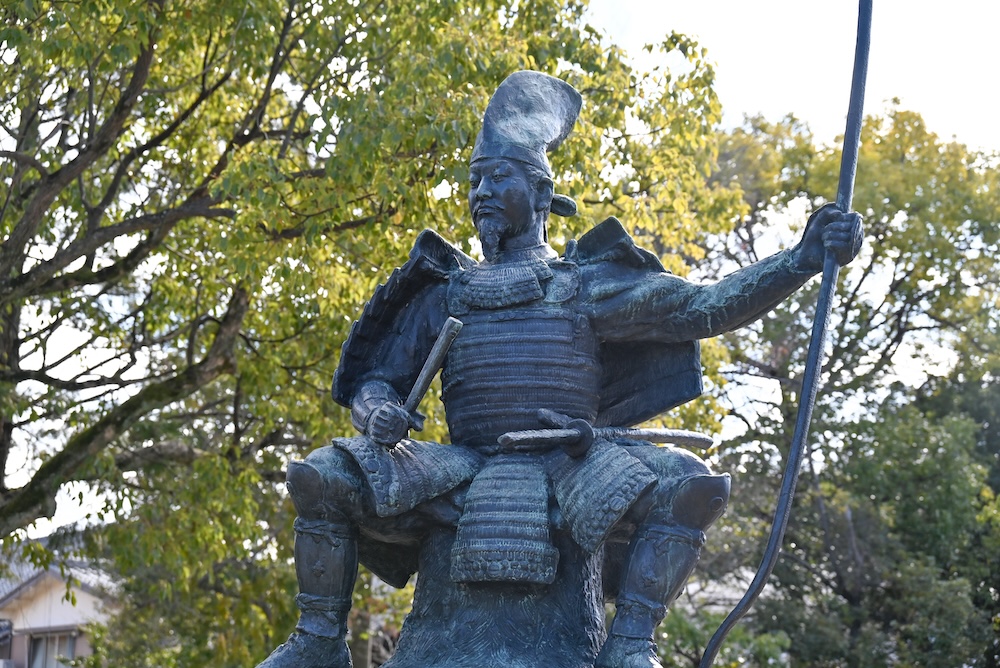
Oda Nobunaga, surely, even if you don’t know much about Japan, you’ve heard of him, right?
Imagine Japan split by never-ending wars. Warlords constantly battling with no single ruler in charge. This era was called the Sengoku period (1467-1615), or the “Warring States” period, a time filled with chaos, violence, and backstabbing. In the middle of all this came Oda Nobunaga, one of history’s most interesting figures. He was a fierce fighter, a smart planner, and a man with big dreams, but also famously cruel. Nobunaga began the mission to bring Japan under one leader. Though he didn’t complete it himself, he set the stage for over 250 years of peace that followed. He was the first of Japan’s “three great unifiers.”
So if you want to know more about this amazing historical figure so important to Japan, join us in today’s blog.
The Tenbun Era
But first, to understand Nobunaga’s story, we need to dig into the historical context in which he was born and raised:
The Tenbun Era (1532-1555) belongs to the Muromachi Period (1336-1573) and coincides with the Sengoku Period, and it ranks among the most unstable subperiods of an era, widely regarded as one of the most chaotic in Japanese history. The Muromachi (Ashikaga) shogunate had lost all real power, and even the emperor was so poor that he had to sell his own calligraphy to survive. Across the country, warlords like Takeda Shingen, Uesugi Kenshin, and Imagawa Yoshimoto fought endless battles over land and power. Betrayal was common, villages were burned, and Japan was consumed by bloodshed.
A major turning point came in 1543, when Portuguese ships brought matchlock guns to Japan. Suddenly, even an untrained farmer could kill a skilled samurai. Then in 1549, the missionary Francis Xavier arrived and began spreading Christianity, shocking many Japanese and planting seeds that would grow into major conflicts later on. Religious violence also erupted, Buddhist sects clashed in Kyoto, turning temples into fortresses and streets into battlefields.
The Tenbun era was dark and brutal, but from that darkness, a new kind of leader was about to emerge, one who would burn the old world down and forge a new one from its ashes.
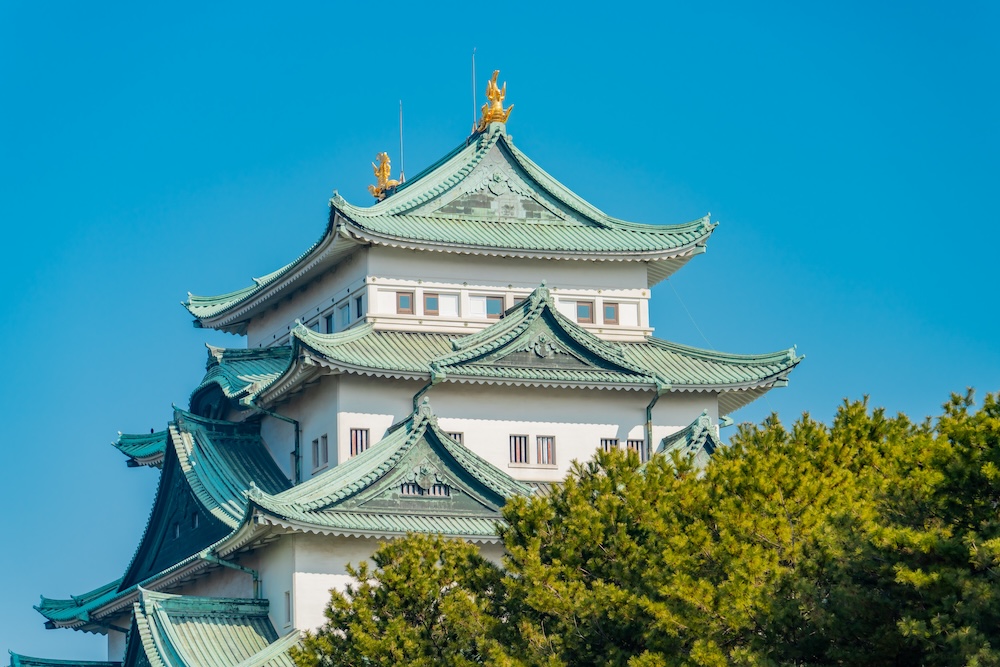
Nagoya Castle, where Oda Nobunaga lived as a child – Photo Credit: Kingmaya Studio
The Boy called “The Fool of Owari”
Picture a boy running through the muddy streets of a small Japanese town. His clothes are strange. His hair is a mess. He eats fruit right off the ground. He wrestles with common kids and laughs at nobles who bow and scrape. This boy is Oda Nobunaga, and everyone thinks he’s crazy.
He was born in 1534 in Owari Province, the western part of Aichi. Many claim he was born in Nagoya Castle, though others insist his true birthplace was Shobata Castle, built by his grandfather, Oda Nobusada, and widely accepted as the site of Nobunaga’s birth. Located in modern-day Inazawa City, Aichi Prefecture, it was abandoned around 1538 when the Oda family relocated to Nagoya Castle. It was not destroyed, but gradually fell into ruin as the family later moved again to Kiyosu Castle. Today, only a monument, an information board, and a statue of baby Nobunaga remain at the site.
His father was Oda Nobuhide, a tough warlord with big dreams. But Nobunaga didn’t act like a warlord’s son. He refused to learn boring old manners. He skipped his lessons. He dressed like a beggar and walked around with half his sword showing. People shook their heads and whispered: “That boy is the Fool of Owari.”
Even his own mother, Tsuchida Gozen (also known as Dota Gozen), couldn’t stand him. She much preferred his younger brother, Nobuyuki, who was polite and proper. But beneath all that wild behavior, Nobunaga wasn’t a fool. He loved weapons. He practiced archery until his fingers bled. He studied guns and tactics. He even made his soldiers carry longer spears than anyone else. While others laughed at him, he was quietly planning something huge. At 13, he had his coming-of-age ceremony and took the name Oda Saburo Nobunaga.
Fun fact: Around that time, a little 6-year-old hostage boy named Matsudaira Takechiyo was brought to his castle. That boy would one day become Tokugawa Ieyasu, the man who would rule all of Japan.
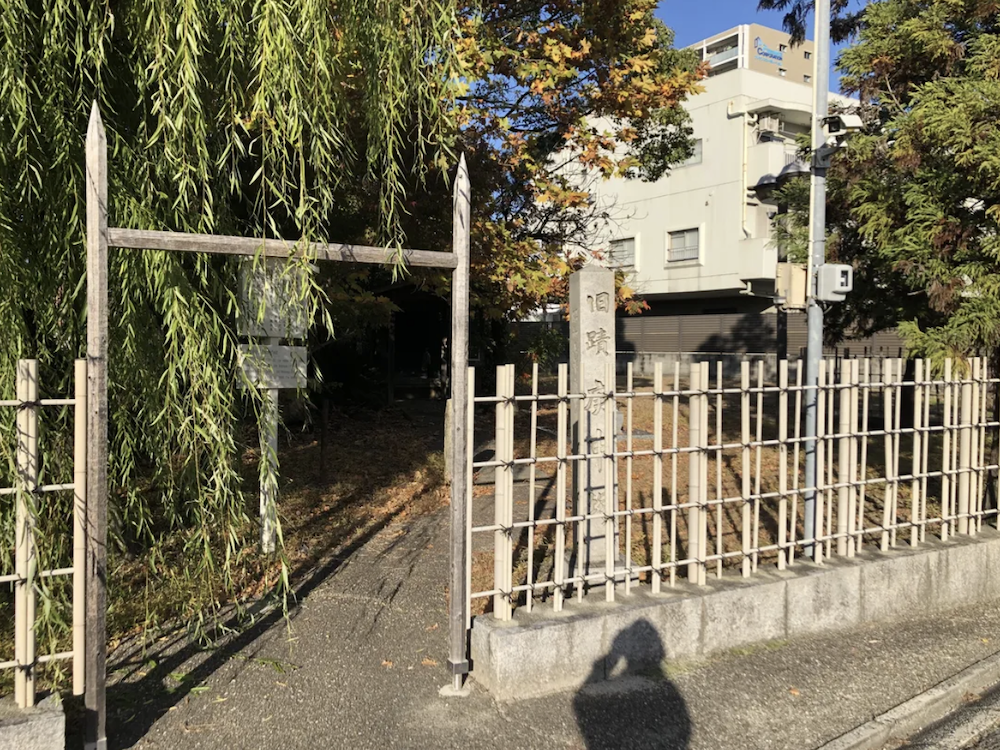
Inogahara Battlefield in Nagoya, Aichi – Photo Credit: Koomot
Where Legend Begins
In 1551, Nobunaga’s father lay cold in the ground. At seventeen, the so-called “Fool of Owari” inherited a clan that refused to follow him. They whispered behind his back. Madman. Weakling. But we know how wrong they were, right? His brother Nobuyuki raised the banner of rebellion, and other relatives quickly followed. Nobunaga’s answer? Total annihilation. Castle by castle, army by army, he crushed every last one. In 1556, at the Battle of Ino (Inogahara), he defeated his brother but showed mercy. However, Nobuyuki plotted a new rebellion in 1558, and this time Nobunaga showed no hesitation; he ended his brother’s life without mercy. When the smoke cleared, Owari was his, every inch of it. The Fool had died. The Master had risen.
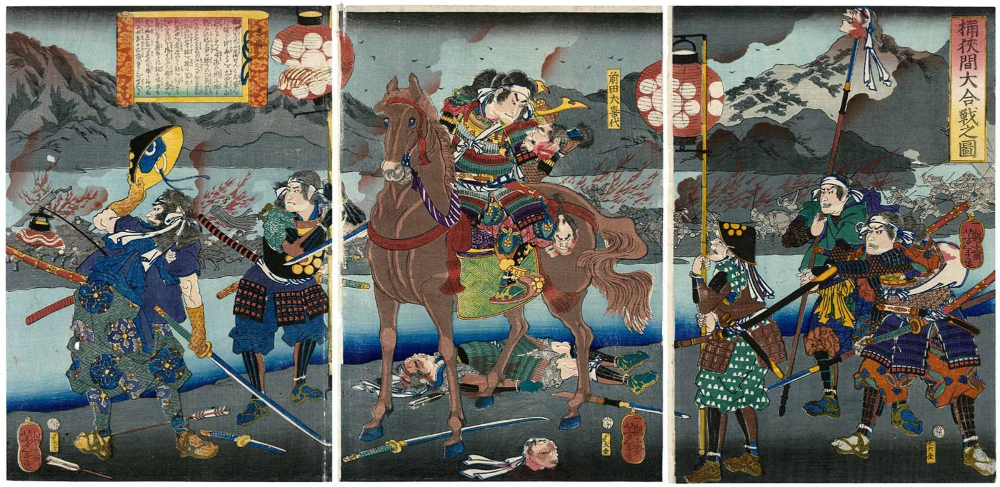
The Battle of Okehazama – Photo Credit: Ukiyo-e Search
The Battle of Okehazama
The year 1560 changed everything. Imagawa Yoshimoto, a giant of a warlord, marched into Owari with 25,000 soldiers. His army was like a tidal wave. Nobunaga had only 3,000 men. Everyone told him to hide. Everyone told him to surrender. Nobunaga laughed. He knew that Yoshimoto was arrogant. That was his weakness. So Nobunaga waited for a storm; a real storm, with thunder and rain. He led his tiny army on a secret march through the darkness. At a narrow valley called Okehazama, they fell upon the enemy camp like ghosts. Yoshimoto was sitting under a tent, drinking sake and celebrating his easy victory. He never saw the blade that killed him. In one shocking moment, the giant fell. His army scattered like leaves in the wind. Overnight, Nobunaga became a legend.
What was at stake? Everything. Yoshimoto wasn’t just passing through, he was on a march to Kyoto, the imperial capital, to seize ultimate power and crown himself shogun. Owari stood in his way like a pebble before an avalanche. He thought Nobunaga would crumble. He thought wrong. In one thunderous night, Nobunaga didn’t just defend his land, he shattered the dream of a giant and rewrote the rules of war in Japan.
After that win, he made a deal with his old childhood friend, Matsudaira Motoyasu (previously known by his childhood name, Matsudaira Takechiyo), now called Tokugawa Ieyasu. They swore loyalty to each other. That pact lasted until Nobunaga’s dying breath. Now Nobunaga had a friend he could trust.
He raised a new banner and stamped it with two bold words: “Tenka Fubu.” It meant “Rule the World by Force.” He was not just fighting for land anymore. He was fighting for everything. In 1567, he crushed the Saito clan and took Mino Province. He moved his base to a great mountain castle, renamed it Gifu Castle, and began signing every order with his new war motto. The whole country started to notice.
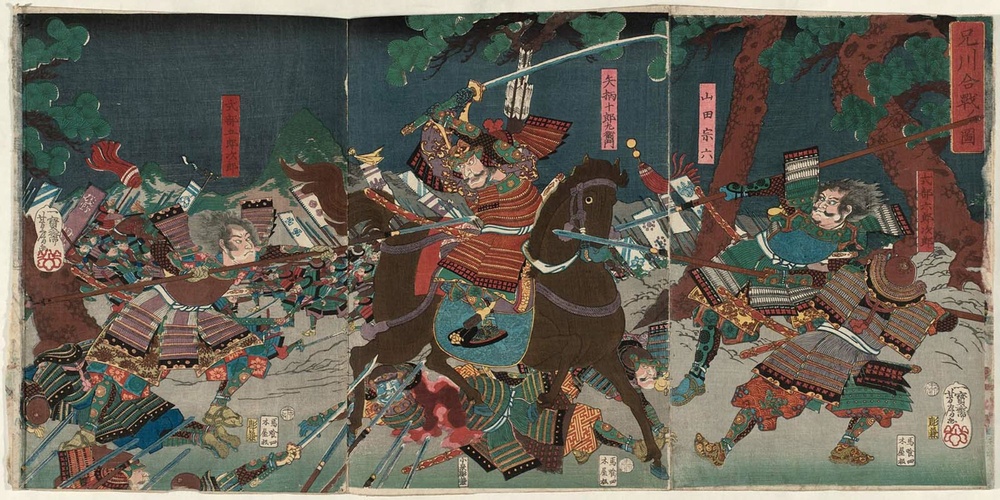
Battle of Anegawa – Photo Credit: Ukiyo-e Search
Marching to the Capital and Making Enemies
In 1568, Nobunaga marched into Kyoto, the capital, the heart of Japan. He put Ashikaga Yoshiaki on the throne as the new shogun. But everyone knew who really ruled. It was Nobunaga. He controlled the emperor. He controlled the government. He controlled the strings.
Yoshiaki hated being a puppet. So he did something very dangerous. He built a secret alliance of powerful enemies against Nobunaga. In 1570, the Anti-Nobunaga Coalition was born. It included warlords like Asakura Yoshikage, Azai Nagamasa, the fierce Takeda Shingen, the warrior-monks of Mount Hiei, and the fanatics of Ishiyama Hongan-ji. It was like the whole country had teamed up to crush one man. But Nobunaga did not run. He fought. At the Battle of Anegawa in 1570, he and Ieyasu smashed the Asakura and Azai armies.
In 1571, he did something terrible. He ordered his soldiers to burn Mount Hiei, the holy mountain of Buddhist monks. Thousands were killed. The flames lit up the night sky. Nobunaga did not care about mercy. He cared about victory.
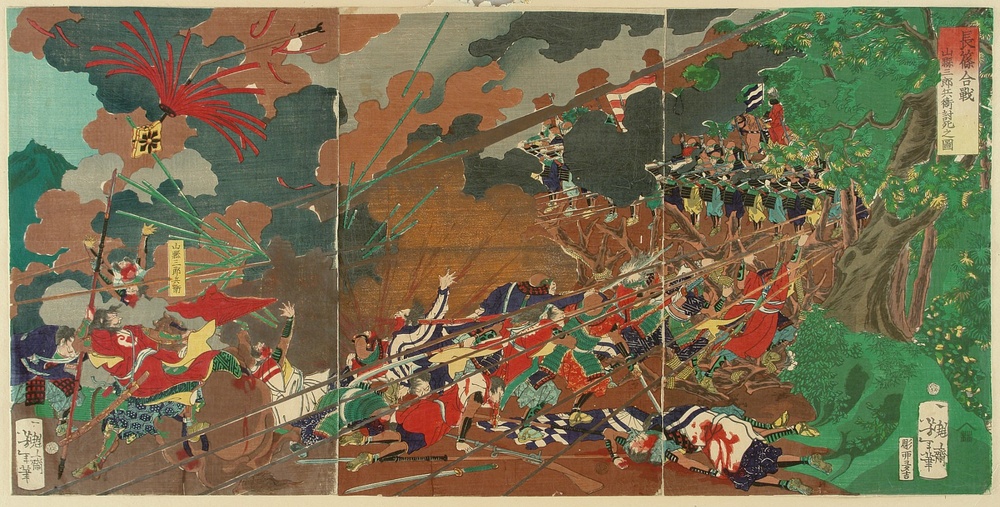
Battle of Nagashino by Utagawa Yoshitora – Photo Credit: Ukiyo-e Search
Smashing the Coalition and Rising Higher
In 1573, Nobunaga kicked Yoshiaki out of Kyoto. The Ashikaga shogunate, the ruling family for over 200 years, was finished. Then he wiped out the Asakura and Azai clans for good. Piece by piece, the coalition fell apart.
The biggest test came in 1575. The Takeda clan, famous for their unstoppable cavalry, charged against Nobunaga and Ieyasu at the Battle of Nagashino. The Takeda horsemen were the terror of Japan. They had never been beaten. Nobunaga had a nasty surprise waiting for them. He lined up 3,000 matchlock gunners behind wooden fences. He trained them to fire in waves: one row shoots, then the second, then the third. Bullets rained down like a storm. The proud Takeda cavalry crashed into the smoke and died. It was a slaughter. That battle changed warfare forever. After Nagashino, Nobunaga crushed uprisings in Ise-Nagashima and Echizen. In 1580, he forced the mighty Ishiyama Hongan-ji to surrender. The Kinai region, the land around Kyoto, was finally at peace.
But Nobunaga was not just a killer. He was a builder too. He split soldiers from farmers to create a fierce, loyal army. He tore down toll gates and let merchants trade freely. He built better roads. He made the scales and measures the same everywhere. These changes helped Japan grow stronger and smarter. In 1576, he raised a castle like no one had ever seen. Azuchi Castle stood tall on the shores of Lake Biwa. It had seven floors covered in gold and painted with dragons and phoenixes. It was not just a fortress. It was a statement. Nobunaga was telling the world: I am the king of this land.
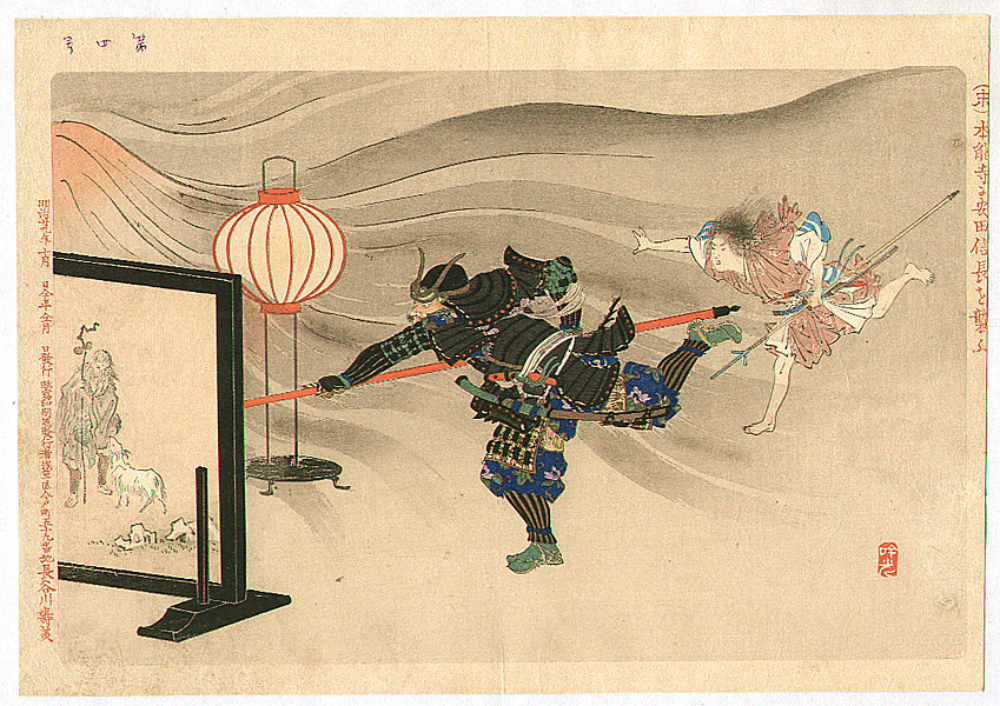
Ranmaru tried to stop Yasuda – Photo Credit: Ukiyo-e Search
The Terrible Morning That Ended Everything
By 1582, Nobunaga had crushed almost every enemy. Earlier that year, he destroyed the Takeda clan in Kai Province. The east was his. The west was next. He was so close to the finish line he could taste it. Then the sky fell. On June 21, 1582, Nobunaga was resting at a temple in Kyoto called Honno-ji. He had only a handful of guards with him. Among them was Hori Ranmaru, his most trusted young page. He was just seventeen, but tough as they come, fierce, fearless, and ready for anything. Ranmaru had been by Nobunaga’s side since he was a kid, and over the years, he’d become more than a servant. He was a loyal fighter through and through, young in years but old in courage. Nobunaga was on his way to help his general Hideyoshi fight in the west.
It was a quiet morning. The birds were singing. Suddenly, the ground shook with the thunder of thousands of feet. Akechi Mitsuhide, one of Nobunaga’s most trusted men, had surrounded the temple with 13,000 soldiers. He had turned traitor. Nobunaga woke up to the sound of swords and screams. He fought hard, but there were too many. Hori Ranmaru stayed close, doing everything he could to help his lord, but even his best wasn’t enough.
Among the first to burst through the gates was Yasuda Sakubei, a samurai sent by Mitsuhide to hunt down Nobunaga. Ranmaru threw himself in his path, trying to hold him back, but Yasuda cut through him without slowing down. He went straight after Nobunaga, spear in hand, chasing him through the smoke and flames. Nobunaga was already wounded. He knew it was over. So he walked into the inner room of the burning temple, knelt down, and ended his own life with seppuku, ritual suicide. As the flames swallowed the building, his body disappeared into the ashes. His remains were never found. He was 49 years old. The Honno-ji Incident became the most famous betrayal in Japanese history. To this day, nobody knows for sure why Mitsuhide turned on him. Some say he was jealous. Some say he was afraid. Some say he had his own dreams of power. The truth died with both of them.
The Unfinished Dream That Changed the World
Nobunaga never saw Japan united. But his dream did not die with him. His best general, Toyotomi Hideyoshi, finished the job in ten years. And his old childhood friend, Tokugawa Ieyasu, finally founded the Tokugawa Shogunate in 1603, a rule that lasted more than 250 years.
Nobunaga is remembered as a warrior, a rebel, and a visionary. He broke old rules. He lifted poor soldiers to high ranks if they were talented. He welcomed guns and ships from the West. He made trade and business bloom. He was cruel, brilliant, fearless, and sometimes terrible. But he was never boring. He began as a laughingstock. He ended as a legend. And his fire still burns bright in the memory of Japan.
Sadly, we’ve already reached the end of this sad but wonderful story full of heroic moments. In popular memory, he is forever frozen in that burning temple at Honno-ji, a strategist cut down just before his great plan could succeed. But that final, desperate betrayal was never the real story. The real story was the fierce, burning drive that came before: the poor upstart who turned a tiny province into the heart of a united Japan, the warlord who gave guns to farmers and mocked old traditions, the thinker who saw Japan not as a bunch of rival clans but as one country waiting to be built. He didn’t fail because he died, he succeeded because he made unity unavoidable. Tokugawa Ieyasu finished the plan he had already drawn in blood and fire. So let us not remember Nobunaga for the smoke of his death, but for the light of his unlikely rise, a man who, for all his cruelty, showed a broken land that it could, at last, become one. That memory outlasts any fire.
Featured Photo Credit: Akio Mukunoki
This land is alive with samurai, clashes, and untold legends. Want to feel what it’s like to be a samurai? Then it’s time to join our Shiga special tour, The Samurai Spirit of Shiga. Your adventure awaits.
0
shares
Book your pocket wifi now to stay connected through your entire Japan Journey!

Be sure to get the JR Pass to make navigating Japan during your trip that much easier!
YOU MIGHT ALSO LIKE