SURUGA: JAPAN’S BEST-KEPT SECRET FOR SLOW TRAVEL & WELLNESS
Feb 16, 2026
BY Maria Diaz
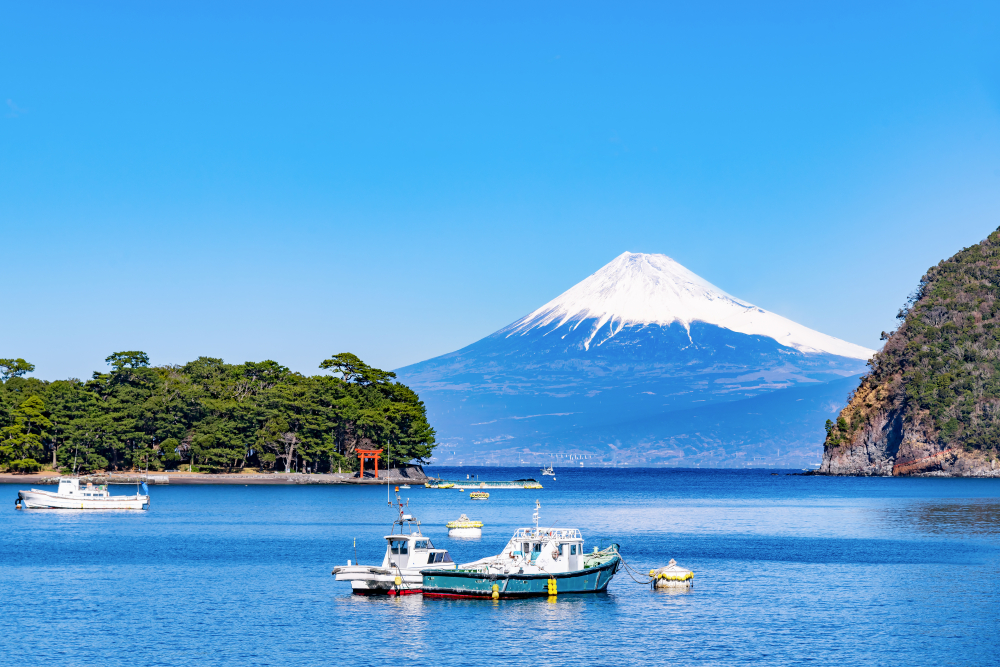
If I say Suruga, you might not recognize the name right away. But if I say it’s in Shizuoka, things probably start to click: Mount Fuji, tea fields, ocean views, that calm Japanese magic, etc. Japan is full of incredible places, and Suruga is one of those quiet gems that doesn’t beg for attention, but totally deserves it. Simple, beautiful, and surprisingly unforgettable. Join us in discovering more about this amazing place and exactly why it is the best destination for those seeking to escape everyday stress.

Hokusai’s Ejiri in the Suruga Province (ukiyo-e) – Photo Credit: Ukiyo-e
A Quick Look Back at Suruga
Suruga’s story goes way back, all the way to the Asuka-Nara period (late 7th-8th century), when Japan first began organizing itself into official provinces. That’s when Suruga Province was formally established and started its long journey through Japanese history.
Things truly came to life during the Edo period (1603-1868), when Suruga became an important stop along the Tokaido Road, the main route connecting Kyoto, Japan’s former capital, with Edo (modern-day Tokyo). Travelers, merchants, and samurai all passed through the area, drawn not only by its strategic location but also by the scenery that was so beautiful it became legendary.
This landscape famously inspired Katsushika Hokusai (yes, the artist behind The Great Wave off Kanagawa), who created his iconic series Thirty-Six Views of Mount Fuji between 1830 and 1832. While not all of the prints are set in Suruga, many of the series’ most famous views of Mount Fuji were drawn from this area, including Ejiri in Suruga Province. (If you want to see more ukiyo-e featuring Suruga, click here.)
And if you’re into Japanese history or shoguns, you’ve probably heard of Tokugawa Ieyasu (1543-1616). He unified Japan and founded the Tokugawa shogunate, which ruled the country for over 260 years. Ieyasu spent his later years in Suruga, helping turn the region into a major political and cultural center during the early Edo period.
Suruga remained an official province for more than a thousand years, until 1868, when the Meiji Restoration modernized Japan and replaced the old provincial system with prefectures. From that point on, Suruga became part of what we now know as Shizuoka Prefecture. If this first taste has caught your attention, stick with me; there’s so much more to discover about Suruga and plenty of reasons why it should be on your list for your next trip to Japan.
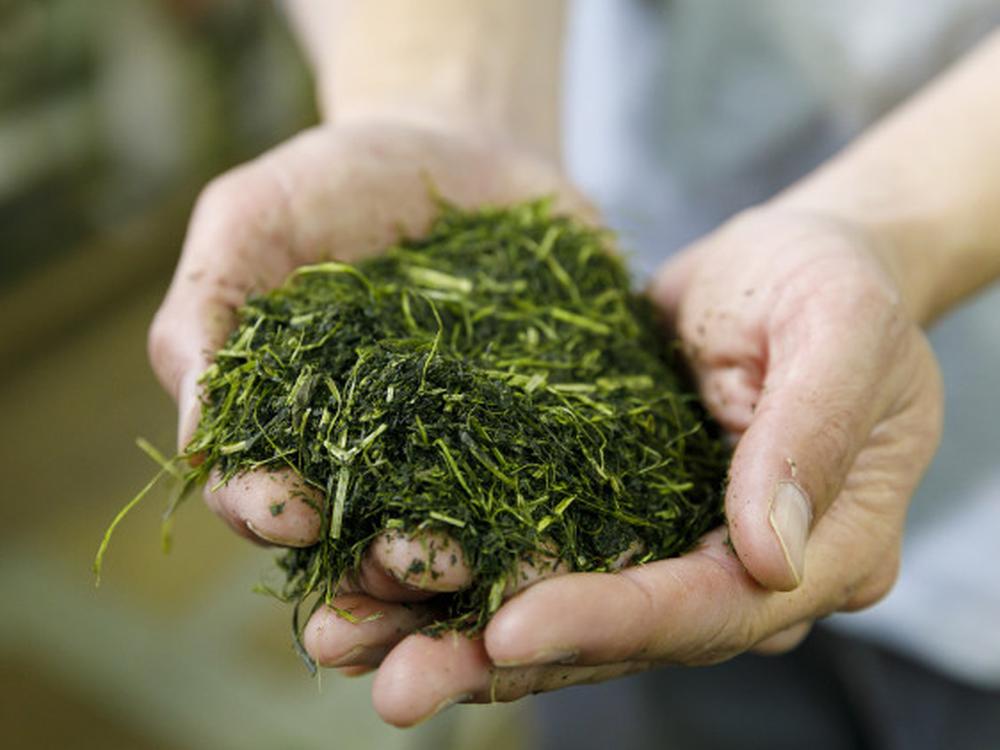
Fresh green tea leaves cradled in two hands – Photo Credit: Visit Suruga
What To Eat and Drink
We can’t talk about Suruga without mentioning what’s made it great for centuries: tea. Thanks to its ideal climate and rich soil, Suruga is one of Japan’s top green tea regions, producing some of the country’s best tea for generations. It’s basically where tea lovers’ dreams come true.
Suruga tea is kind of a big deal; in fact, it accounts for about 40% of all tea produced in Japan. The plant has been grown here since 1241, and thanks to perfect climate conditions, clean water, and easy access to trade routes, it exploded in popularity during the Edo period. Basically, the tea gods really smiled on this place, and trust me, you won’t want to leave without trying one of these delicious drinks!
Today, Shizuoka tea (aka Shizuoka-cha) is considered one of Japan’s top three teas. And within that name, there’s a whole world of flavors!
Kakegawa-cha (掛川茶)
This is a well-known regional tea from Shizuoka, especially famous for its deep-steamed sencha (fukamushi-sencha). It is regarded as one of the “Three Great Teas of Japan” and is produced in the Kakegawa area, which accounts for about 10% of Shizuoka’s total tea production. The region has received numerous awards, including repeated wins at the National Tea Competition, reflecting its consistently high quality. Kakegawa also practices a traditional tea-grass integrated farming method, recognized as a Globally Important Agricultural Heritage System, which helps improve flavor while supporting environmental sustainability. Drinks can be labeled as Kakegawa-cha as long as they are produced within the Kakegawa region.
Honyama-cha (本山茶)
This is a traditional green tea from the mountain valleys of Shizuoka, known for its long history and refined flavor. It has been cultivated for over 800 years and was once favored by Tokugawa Ieyasu. Grown in cool, misty conditions, it produces a smooth, elegant sencha with gentle umami and balanced bitterness. Today, it’s valued for its quality, heritage, and small-scale production.
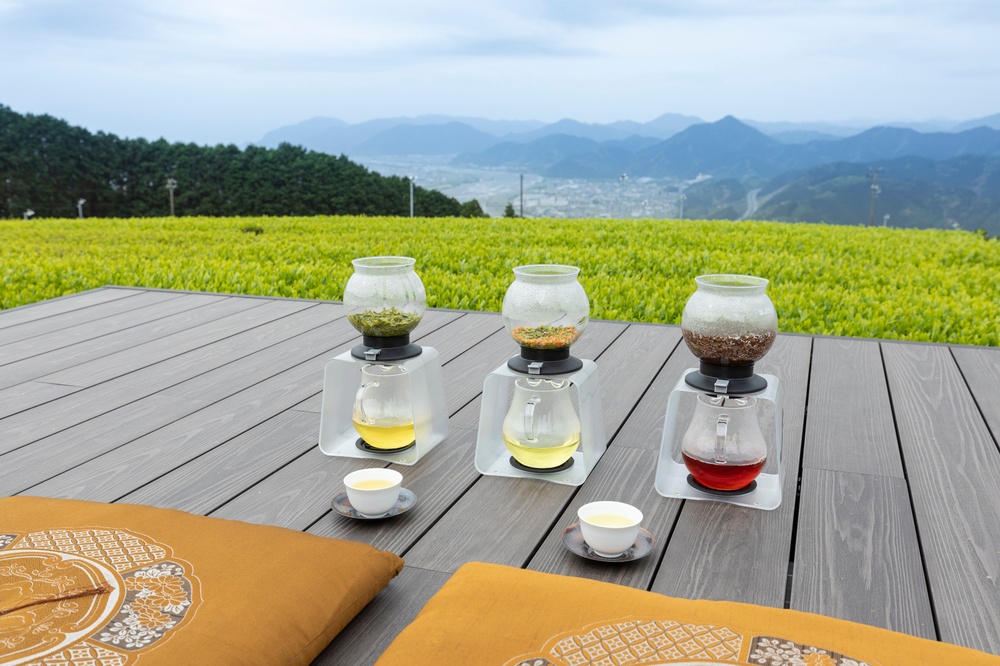
Tea tasting with a breathtaking view – Photo Credit: Jessica Iragne
Kawane-cha (川根茶)
A high-quality green tea grown in the mountainous Kawane region (Kawanehon town) of Shizuoka Prefecture. Cultivated at high elevations along the Oi River, it is known for its clean aroma, refined bitterness, and clear, refreshing taste. Thanks to the cool climate and large day-night temperature differences, Kawane-cha develops a light, elegant character. It is especially prized by enthusiasts for its clarity and balance.
Tenryu-cha (天竜茶)
This green tea is produced in the mountainous Tenryu region of western Shizuoka Prefecture. Grown in a cool, misty environment along the Tenryu River, it develops a gentle aroma and a mild, well-balanced flavor that is smooth and easy to drink. Known for its soft sweetness and low astringency, Tenryu-cha is often appreciated as an everyday tea with a clean, comforting character.
Makinohara-cha (牧之原茶)
A green tea grown on the vast Makinohara Plateau in Shizuoka Prefecture, one of Japan’s largest tea-producing areas. The region’s wide, sunlit fields and well-drained soil produce leaves with a bold flavor, gentle sweetness, and pleasant umami. Known for its consistency and approachable taste, Makinohara-cha is widely enjoyed and represents the foundation of Shizuoka’s large-scale tea production.
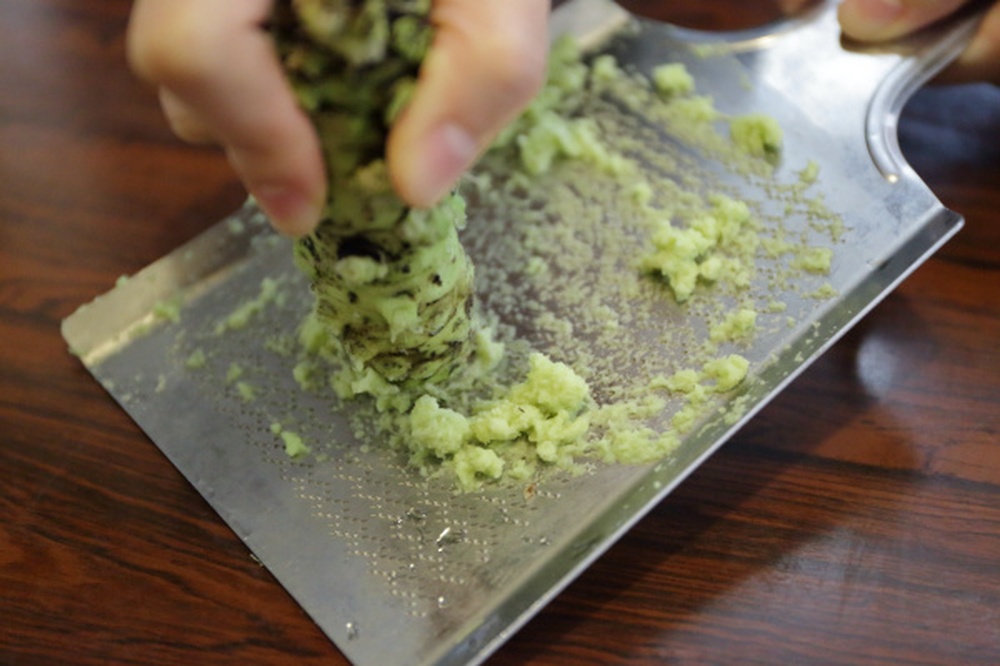
Fresh wasabi being grated by hand on a metal grater – Photo Credit: SHUN GATE
Another special product from Suruga is wasabi. Thanks to its pure mountain spring water and cool climate, the region has been growing high-quality wasabi for over 400 years. Shizuoka Prefecture now produces the majority of Japan’s real wasabi, as the truest form must be grown in clean, running spring water. Much of it is cultivated using traditional water-grown methods that enhance its fresh, clean heat. Just like Suruga’s tea, its wasabi reflects the region’s rich natural environment and long agricultural heritage.
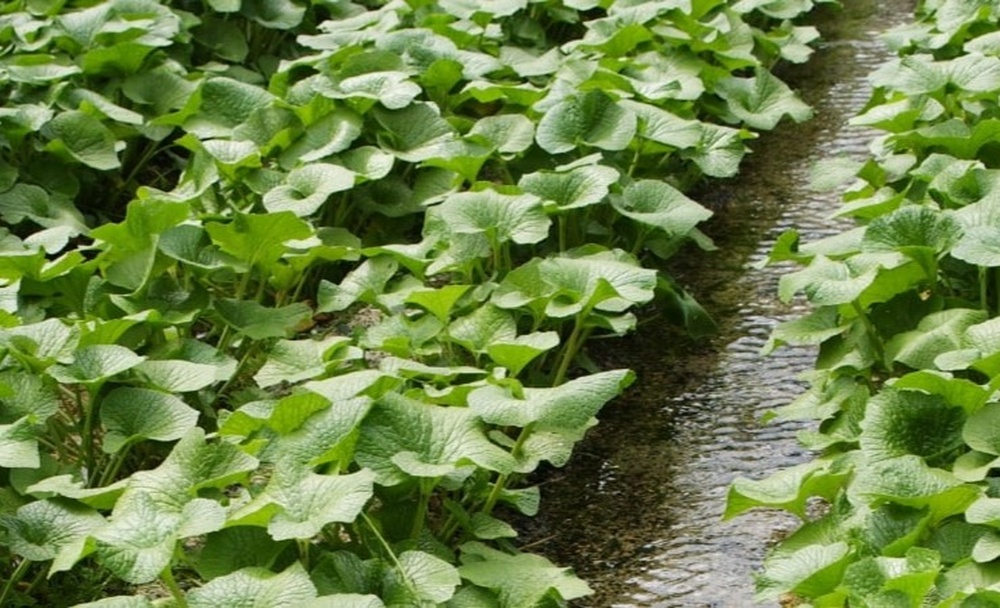
Water-grown wasabi – Photo Credit: Kinjirushi Wasabi
Sawa-wasabi (water-grown wasabi)
This is the most prized type of wasabi in Suruga. It’s grown in cool, flowing mountain spring water, which gives it a fresh aroma and a clean, gentle heat. Because it requires extremely pure water and careful cultivation, sawa-wasabi is considered the highest quality and is what people usually mean when they talk about “real” wasabi.
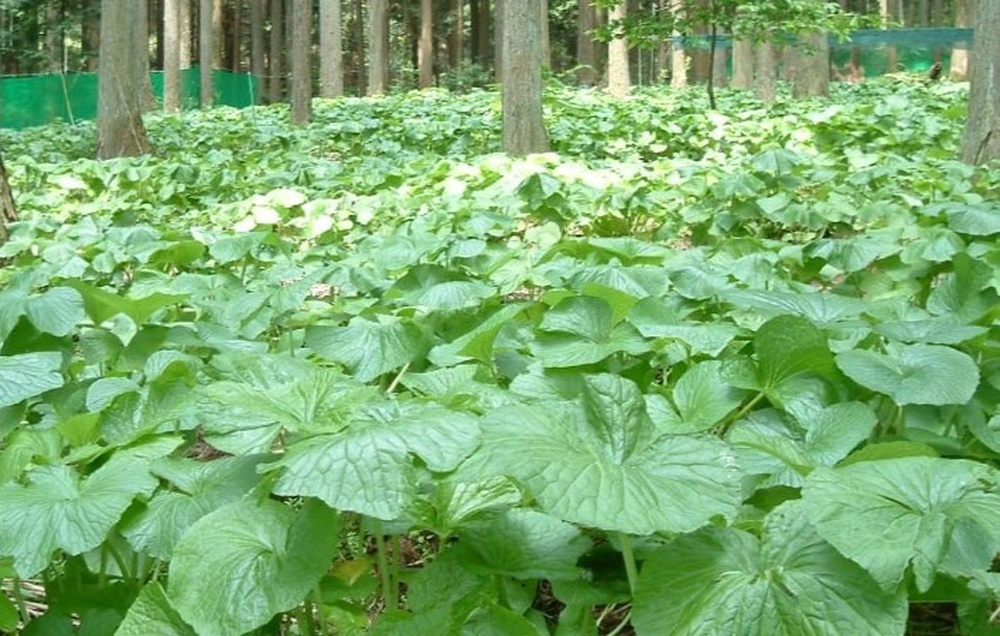
Field-grown wasabi – Photo Credit: Kinjirushi Wasabi
Hatake-wasabi (field-grown wasabi)
Hatake-wasabi is grown in soil rather than running water. While still authentic, it has a slightly milder and earthier flavor compared to sawa-wasabi. It’s easier to cultivate and more widely available, making it common in everyday cooking.
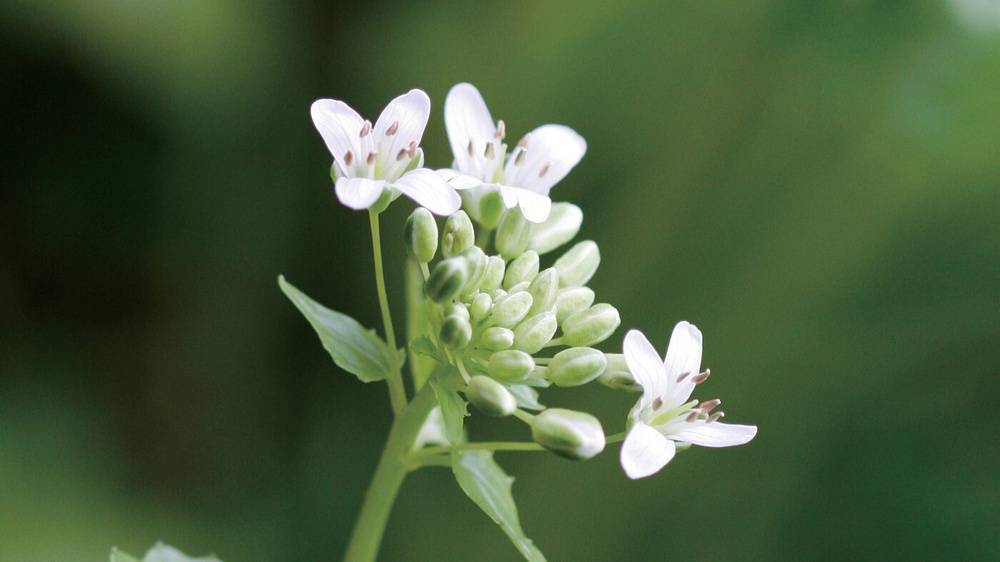
Butterfly-like Wasabi Flower – Photo Credit: Wasa-lab
Fun Fact: Wasabi flowers are also edible and traditionally pickled in soy sauce. They have a mild, fresh flavor and are considered a seasonal delicacy in Japan, rather than being spicy like wasabi paste.
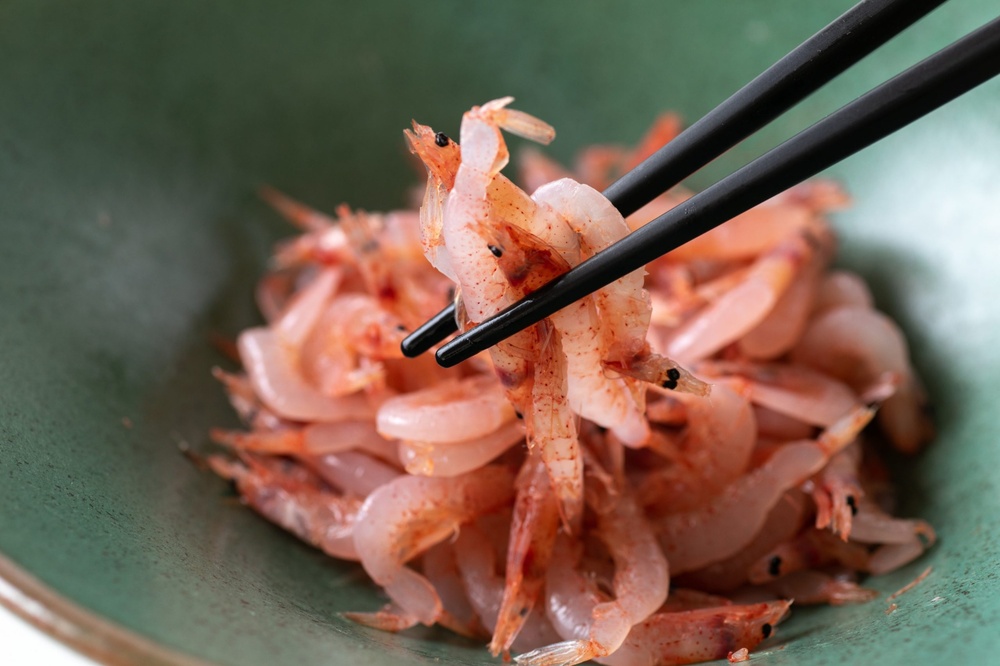
Fresh sakura shrimp being picked up with chopsticks – Photo Credit: Oishii Sangyo
Sakura-ebi (shrimp) are a rare delicacy found only in Suruga Bay and parts of Taiwan, making them one of Shizuoka’s most treasured local foods. They can be eaten raw only in Shizuoka, where their exceptional freshness gives them a delicate texture and a sweet, melt-in-your-mouth flavor. The best seasons to enjoy sakura shrimp are spring (from mid-March to early June) and autumn (from late October to late December), when they are served as sashimi or over rice in simple yet flavorful dishes.
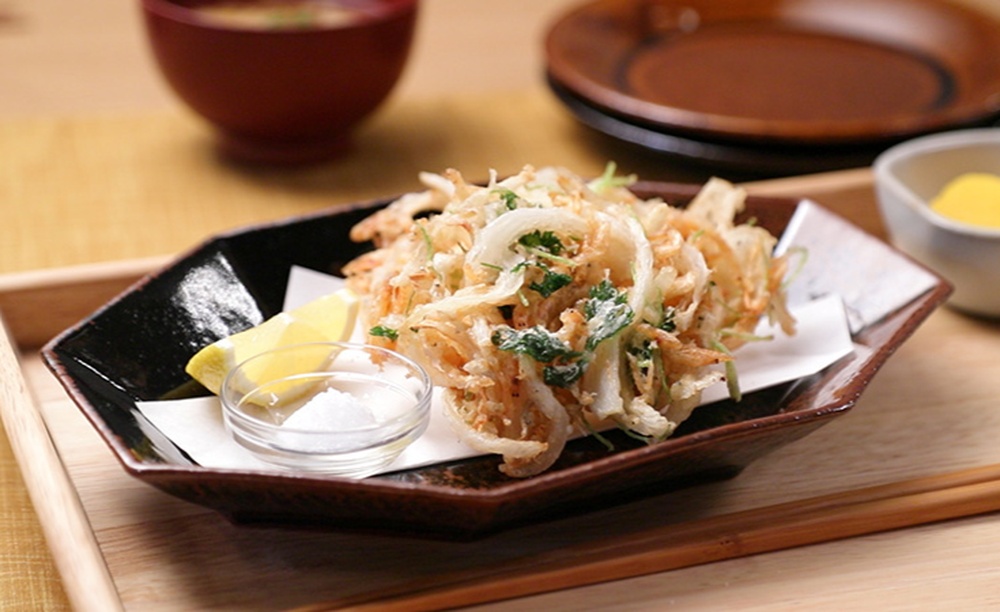
Sakura shrimp and whitebait kakiage tempura – Photo Credit: daiei
Every May, the Yui Sakura Shrimp Festival celebrates this regional specialty, which is so beloved that it even appears in school lunches across the prefecture, often as kakiage tempura with whitebait.
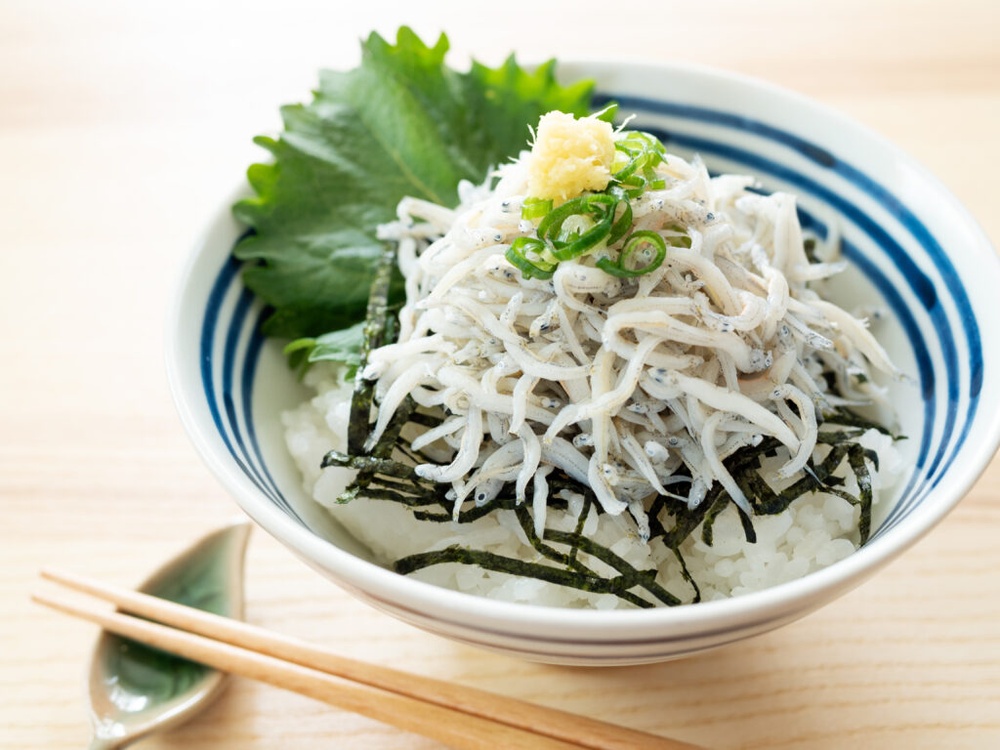
Whitebait served over a rice bowl – Photo Credit: Fukusensuisan
Whitebait (shirasu) is another beloved specialty of Shizuoka, especially around Suruga Bay, where it is found fresh daily. These tiny, translucent fish are enjoyed in many ways, raw, lightly boiled, or dried, and are prized for their delicate flavor and soft texture. Fresh raw shirasu can only be eaten near the coast due to its extreme freshness, making it a local delicacy. Often served over rice, in bowls, or as part of tempura, whitebait is a staple of regional cuisine and a symbol of Shizuoka’s close connection to the sea.
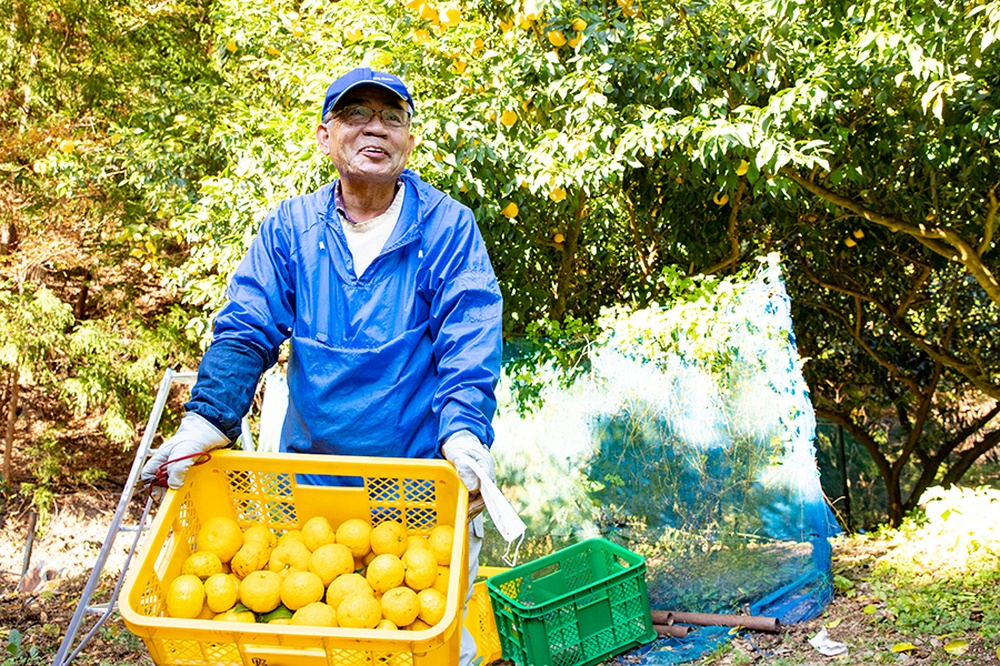
A Kawanehon farmer harvesting fresh yuzu – Photo Credit: Kawane Honcho Yuzu
And here we go again, because the previously mentioned Kawanehon town isn’t just great at producing tea; one of its standout specialties is yuzu. This fragrant citrus benefits from clean air, river mist, and large temperature differences between day and night. Cultivated at elevations of 200-600 meters, Kawanehon yuzu is known for its intense aroma, rich flavor, and thick, aromatic peel. Local farmers carefully grow it with minimal pesticides, and it’s used in everything from yuzu powder and seasonings to oils and sweets. The same natural environment that makes Kawane tea so special is also what gives Kawanehon yuzu its distinctive character.
What to See and Do
Since the name Kawanehon has already been mentioned twice in this blog, it must be for a reason, right? And if you’re short on time, I’d definitely recommend visiting this wonderful town. With so much to do there, don’t be surprised if it appears even more going forward! But without further ado lets look at some of the best things to see and do in the area, whilst experiencing its nature to its fullest and finding yourself truly relaxed and reset from the struggles of dailylife.

Women having fun at Otogi no Sato – Photo Credit: Kawanehoncho Town
Otogi no Sato (Village of Music Museum) is a fun and charming music spot where sound truly comes to life. Surrounded by nature, this playful “Village of Music” invites visitors to touch, listen, and enjoy music in a relaxed, hands-on way. From traditional instruments to interactive exhibits and live performances, it’s a place where both kids and adults can have fun while discovering the joy of sound.
Website: https://www.otoginosato.com/ (in Japanese)
Opening Hours: 10:00 – 16:00 (Closed on Tuesday and Wednesday)
Admission: From age 15 to 65 – ¥500. From age 65 – ¥400. Children (6 and up) – ¥300
*Visitors can get a web discount coupon for admission by showing it at the reception (printed or on a smartphone), and are asked to complete a short questionnaire (click here).
Address: 1217-2 Senzu, Kawanehon, Haibara District, Shizuoka 428-0411
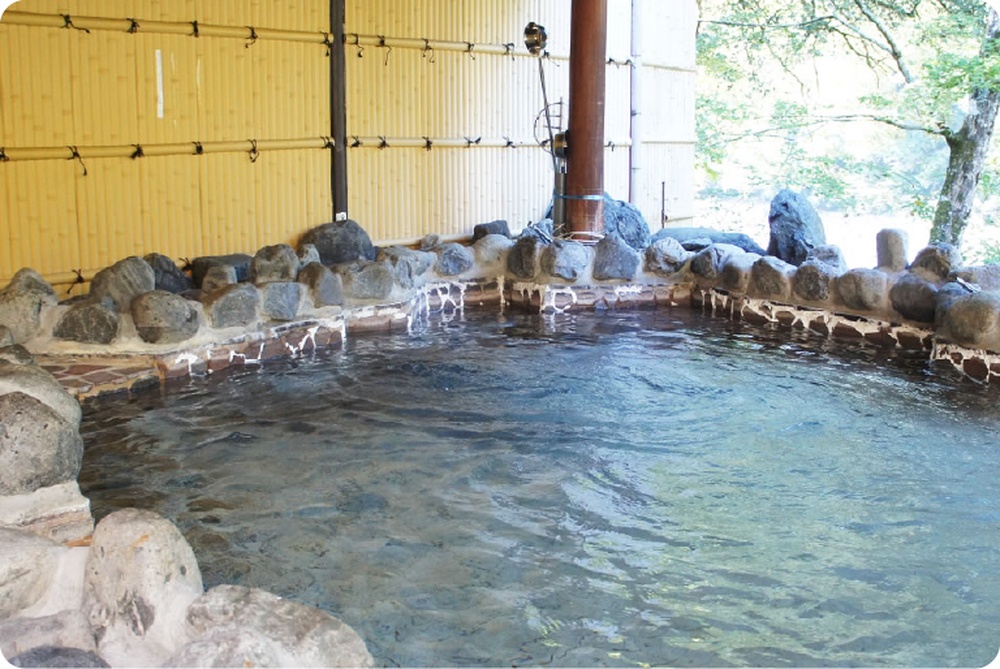
A peaceful outdoor hot spring at Morino Izumi – Photo Credit: Morinokuni
If you’re looking for a truly relaxing time, Morino Izumi is the perfect place to slow down and recharge. With open-air baths, seasonal tubs, bubbling baths, and a calming sauna, it’s an ideal spot to unwind after a day of exploring.
Website: https://morinokuni.jp/morinoizumi/ (in Japanese)
Opening Hours: 10:00 – 20:00 (Closed on Wednesday)
Admission: Adults ¥1,000. Children ¥500
*Face towel for purchase ¥250. Bath towel (rental): ¥300. Toothbrush / Razor: ¥50
Address: 840-1 Okuizumi, Kawanehon, Haibara District, Shizuoka 428-0412

Night views of the beautiful sky at Mitsuboshi Observatory – Photo Credit: 隆之
Mitsuboshi Astronomical Observatory is a magical little spot in Kawanehon where you can look up and truly enjoy the night sky. On clear evenings, visitors can join guided stargazing sessions and see planets, constellations, and even the Milky Way through powerful telescopes. It’s a relaxed and fun experience, perfect whether you’re a space enthusiast or just curious to see the stars up close. Since visits are by reservation only and depend on the weather, it’s best to book ahead, but if the skies are clear, you’re in for a truly unforgettable night under the stars.
Website: https://kanko70771.wixsite.com/mitsuboshitenmondai (in Japanese)
Opening Hours: 19h – 22h (Open from Friday to Sunday)
Admission: From age 15 – ¥400. From age 6 – ¥300
*Please make a reservation well ahead of time
Address: 866-5 Mizukawa, Kawanehon, Haibara District, Shizuoka 428-0312
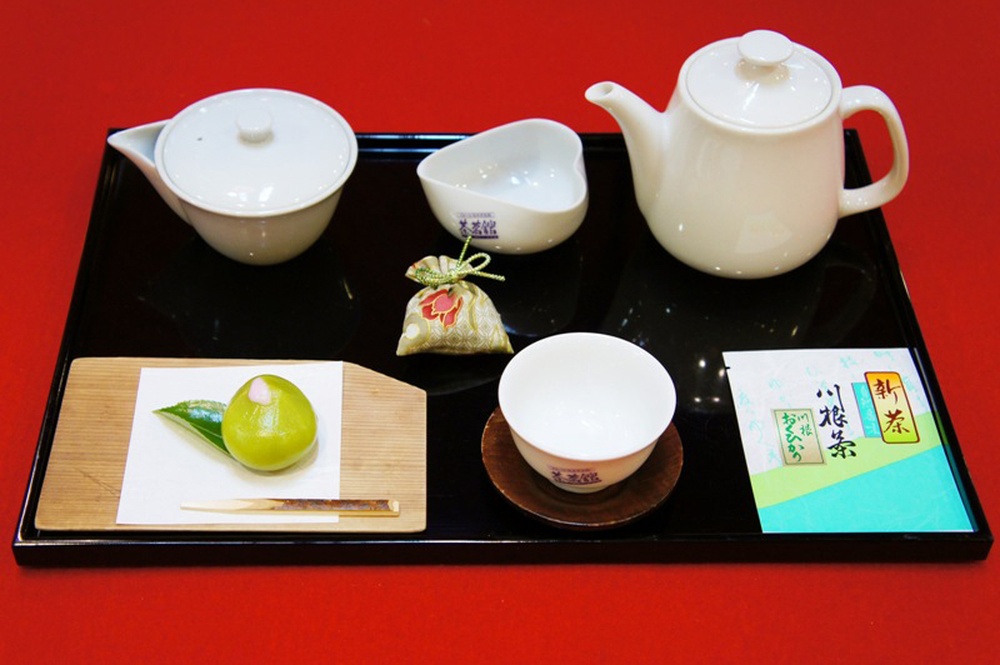
Kawane-cha at Chameikan – Photo Credit: Kawanehoncho Town
Fore Nakakawane Chameikan is a warm and welcoming spot where you can truly slow down and experience the charm of the region through its famous tea. Surrounded by nature, this cozy tea-themed facility is the perfect place to take a break, relax, and learn more about Kawane tea, which has been enjoyed here for generations. Inside, you’ll find exhibits that explain the history and culture of tea in the area, along with a tasting corner where you can try different varieties and discover how brewing methods change the flavor. There’s also a shop filled with local tea products, sweets, and souvenirs, including popular treats like Kawane tea ice cream. One of the highlights is the peaceful atmosphere: you can sit back, enjoy a cup of tea, and even watch the Oigawa Railway trains pass by nearby.
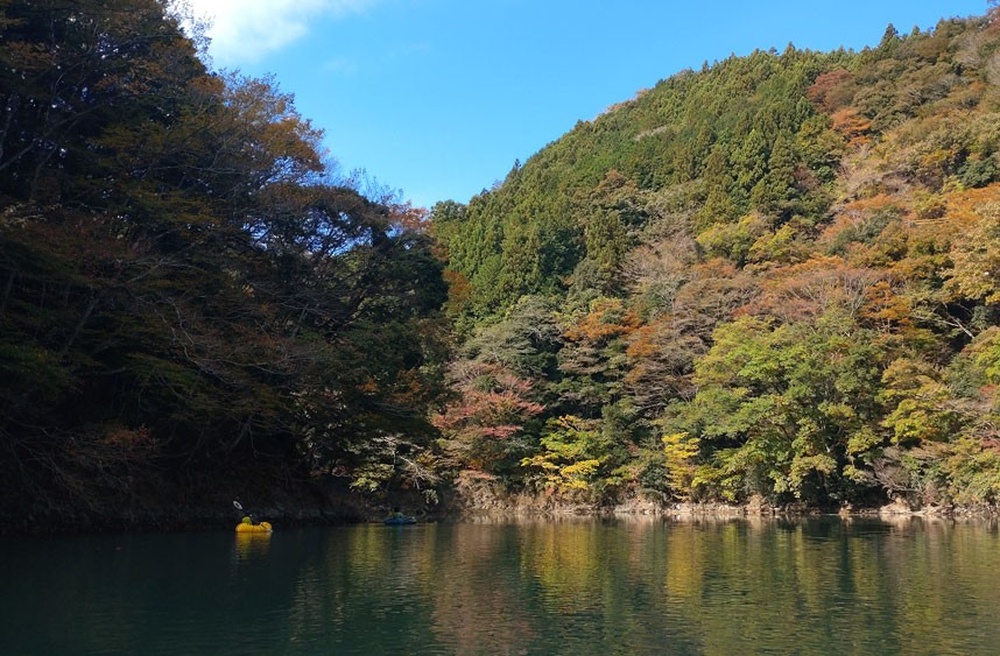
Kayaking while enjoying nature – Photo Credit: Kawanenone
Time to move! Kawane also offers a mix of outdoor adventures and hands-on experiences that let visitors enjoy the natural beauty of the area. You can participate in activities like kayaking and river play, which are perfect for experiencing the surrounding mountains and waterways up close around Sasamagawa Dam Lake. There are also workshops and support sessions for learning how to use smartphones and computers, making it a great spot for both outdoor fun and practical learning. With plans to expand its activities in the future, it’s a nice option for anyone looking to combine nature, learning, and a relaxed local atmosphere.
*This type of experiences tend to last about 120 minutes, and costs around ¥3,500 – ¥4,000 per person/two-seater
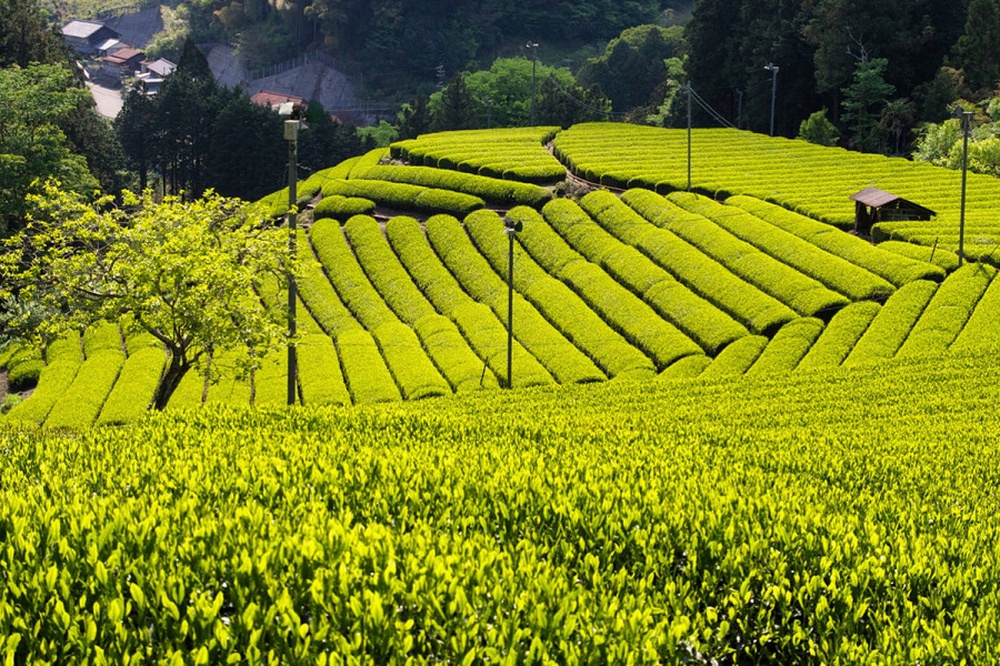
Shidajima Tea Garden has manicured tea terraces – Photo Credit: Visit Suruga
Last but not least, we can’t finish our trip to Suruga without seeing for ourselves how tea and wasabi are harvested. Shidajima-en Tea & Wasabi Farm is a charming little farm set in the rolling hills near the Abe River, where visitors can enjoy both tea and wasabi experiences in a beautiful natural setting. You’re invited to take a walking tour that starts at the tea processing area and leads up to a scenic hilltop where tea fields and wasabi fields sit side by side. Here, you can relax with a cup of aromatic green tea while gazing over fields that change with the light and the seasons, a truly nostalgic and peaceful landscape. The farm is run by a seventh-generation farmer who handles everything from cultivation to in-house processing, applying deep agricultural knowledge and a thoughtful approach that blends tradition with care for the local environment. It’s a lovely spot for anyone who loves tea, nature, or wants a taste of authentic Japanese farm life in Suruga’s scenic countryside.
Visitors can also try on a traditional tea-picking costume for ¥500 per person (available in one adult size and one child size for ages 2-5). A professional photo session using a DSLR camera is also available: ¥1,000 for the first 10 photos, with additional sets of 10 photos for ¥500.
Website: https://shitajimaen.amebaownd.com/ (in Japanese)
Admission: ¥6,000 per person (¥10,000 if only one participant)
*For groups of 6 or more, please inquire in advance. Tasting included. Make a reservation here
Address: 1298 Ochiai, Aoi Ward, Shizuoka, 421-2224
Suruga isn’t just a place you visit, it’s a place that invites you to slow down, breathe, and reconnect with yourself. Here, learning and enjoyment go hand in hand, whether you’re discovering how tea and wasabi are grown, soaking in a quiet hot spring, or gazing up at a sky full of stars. It’s the kind of destination where simple experiences feel meaningful, and where Japan’s traditions, nature, and warmth come together naturally. In Suruga, you don’t just learn about Japan, you feel it, at your own pace, whilst reconnecting with the world around you in a truly meaningful way.
If Suruga’s calm landscapes and rich traditions spoke to you, take the next step and experience it firsthand with the Luxurious Suruga journey.
Featured Photo Credit: Princess_Anmitsu
If you’re looking for more adventures throughout Suruga, make sure to check out our Multi-Day Itinerary in the area for a relaxing, naturally stunning time throughout the area!
PIN THIS FOR LATER

Book your pocket wifi now to stay connected through your entire Japan Journey!

Be sure to get the JR Pass to make navigating Japan during your trip that much easier!
YOU MIGHT ALSO LIKE