Slice Like a Pro: Your Go-To Guide to Japanese Knives in Japan
May 22, 2026
BY Nadia Moawwad
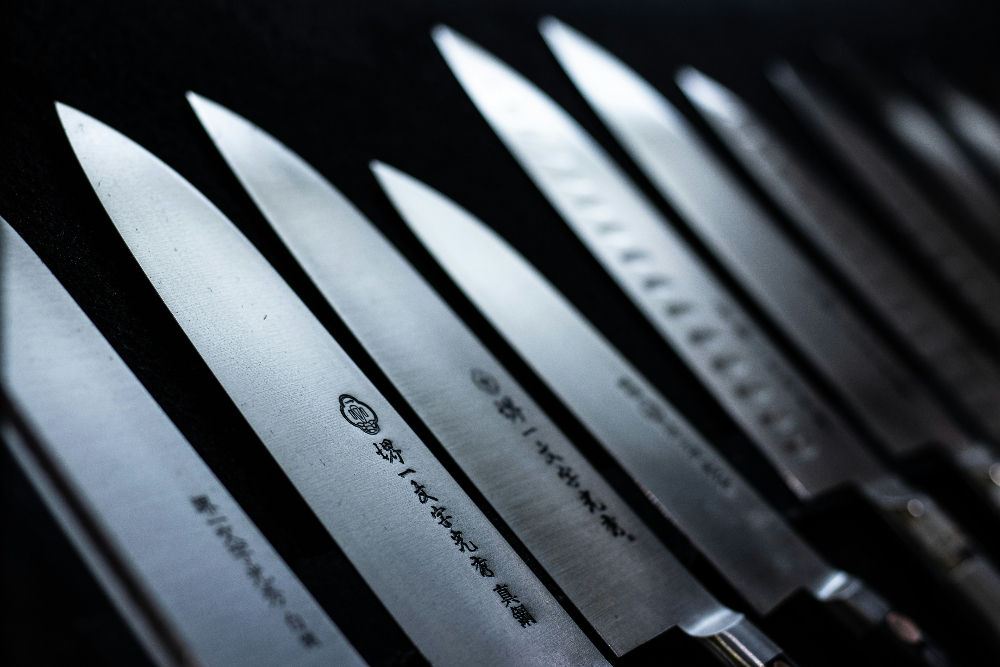
Ever wondered how sushi chefs get those cuts so clean and precise? It’s not just skill, it’s also the knife. Japanese knives are tools of precision, tradition, and craftsmanship. Have you ever wondered what types of knives are used in Japan? Whether they’re made specially for sushi chefs or made for daily use, each one is designed for a specific task, whether you’re slicing sashimi, chopping veggies, or filleting fish. If you’re curious about what makes these blades so special or maybe thinking of buying one, here’s a friendly guide to the different types of sushi knives and what they’re used for.
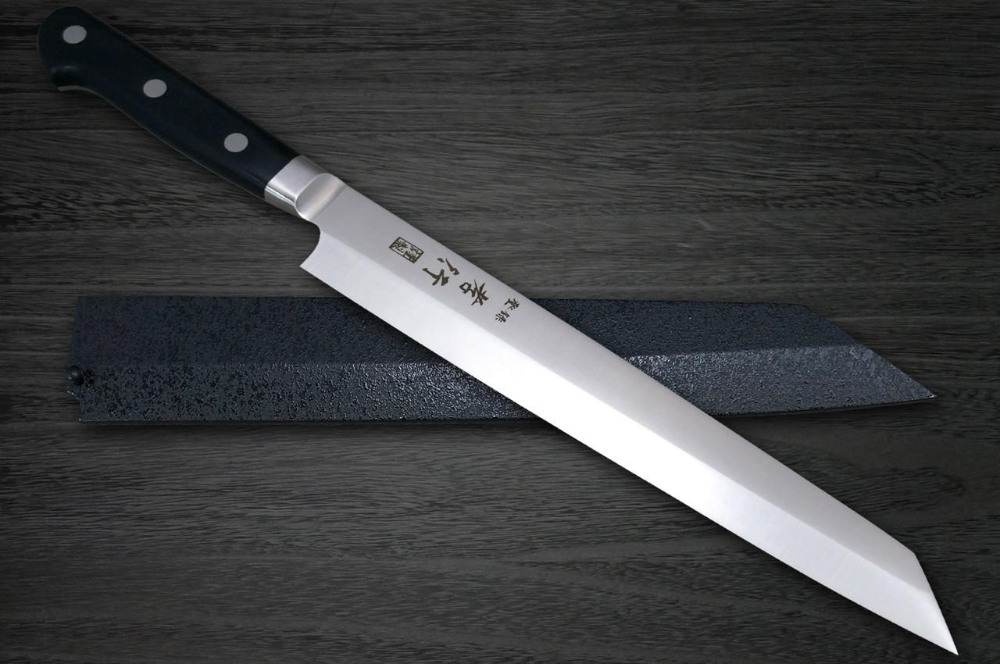
Yanagiba – Photo Credit: Hocho Knife
Yanagiba (やなぎば包丁) – The Classic Sashimi Knife
Use: Slicing sashimi and boneless fish fillets.
This is the most iconic sushi knife. Long, slender, and razor-sharp, the yanagiba is designed to make clean, one-directional cuts without tearing the flesh. It’s the go-to blade for sashimi masters. Traditionally, chefs use the entire length of the knife in a single pull to preserve the texture of the fish.
Fun fact: The name means “willow blade” because its shape resembles a willow leaf.
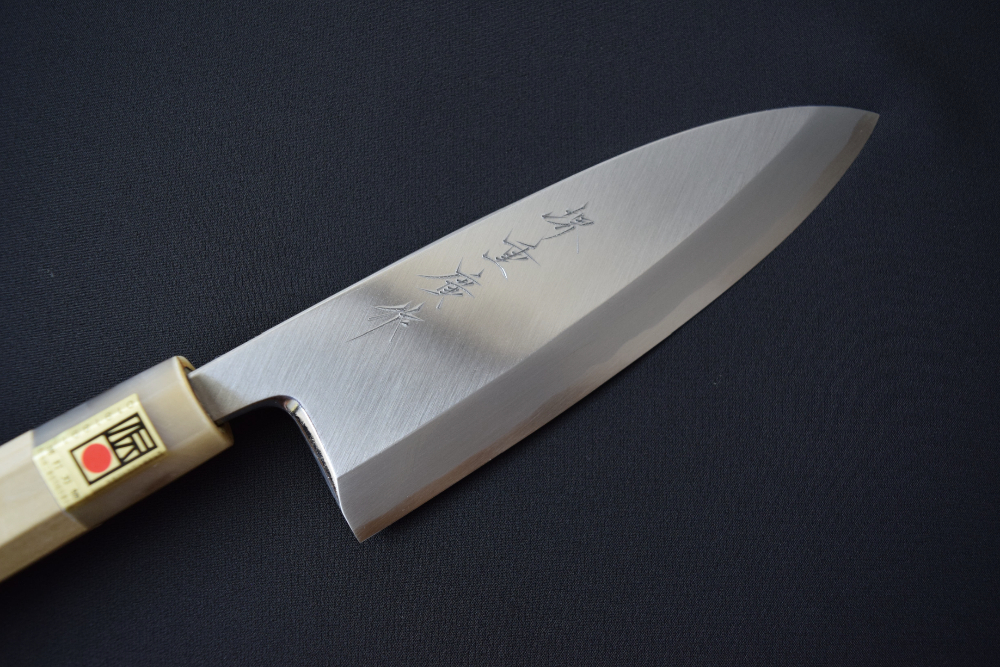
Deba – Photo Credit: De Sakai
Deba (出刃包丁) – The Heavy Hitter
Use: Butchering whole fish, cutting through small bones.
If you’re starting with a whole fish, the deba is your best friend. It’s short, thick, and strong, more like a cleaver than a fillet knife. Great for making the first cuts, removing heads, and dealing with tougher parts of the fish. Despite its bulk, it still allows for precision where needed.
Pro tip: Not meant for large bones, it’s strong, but not indestructible.
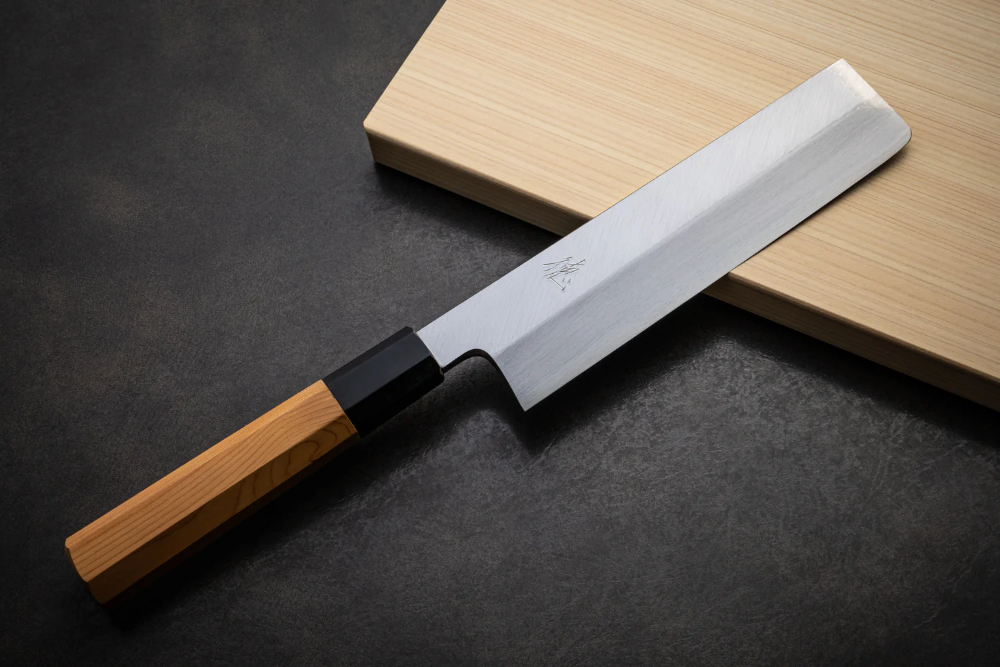
Usuba – Photo Credit: Japan Knife Toku
Usuba (薄刃包丁) – The Vegetable Knife
Use: Precision vegetable cuts, thin slices, garnishes.
Not all sushi involves fish! The usuba is a specialist in vegetables. It has a flat edge, making it ideal for push cuts and ultra-thin slices, perfect for techniques that require clean, straight cuts without crushing the produce. You’ll often see it used for decorative garnishes like cucumber rolls or daikon radish ribbons, as well as katsuramuki (continuous thin peeling).
Fun fact: In traditional kitchens, sushi chefs often start training with vegetables before touching fish.
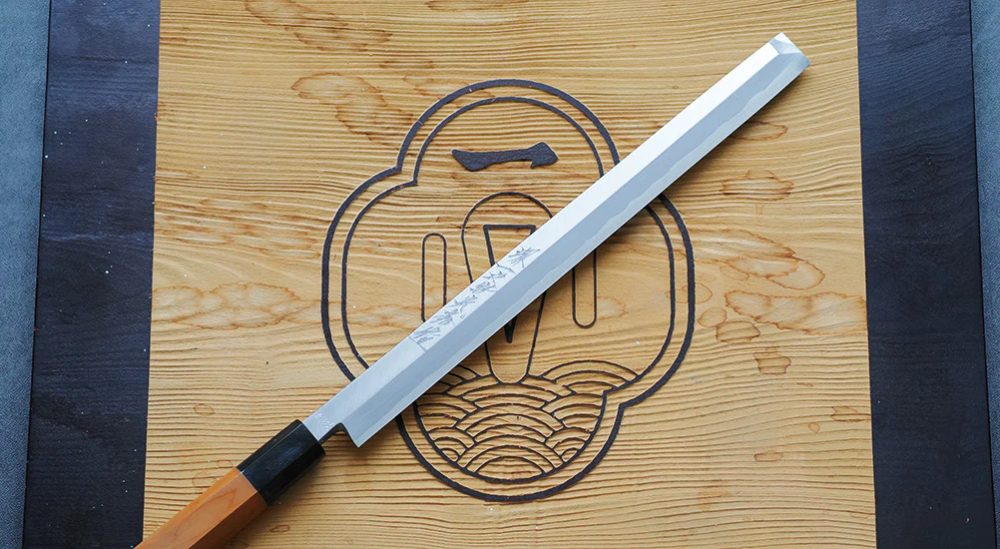
Takohiki – Photo Credit: Ichimonji
Takohiki (蛸引包丁) – The Octopus Knife
Use: Slicing octopus and other tough proteins.
A regional variation of the yanagiba, the takohiki features a slightly flatter profile and a squared-off tip. Developed in the Kanto region (Tokyo area), it’s especially handy for slicing dense or slippery proteins like octopus, squid, or shellfish. The flat edge reduces drag and helps maintain clean slices even through more rubbery textures. Some chefs choose the takohiki for aesthetic reasons, while others swear by its added precision for tougher seafood. Either way, it’s a blade that combines elegance with strength.
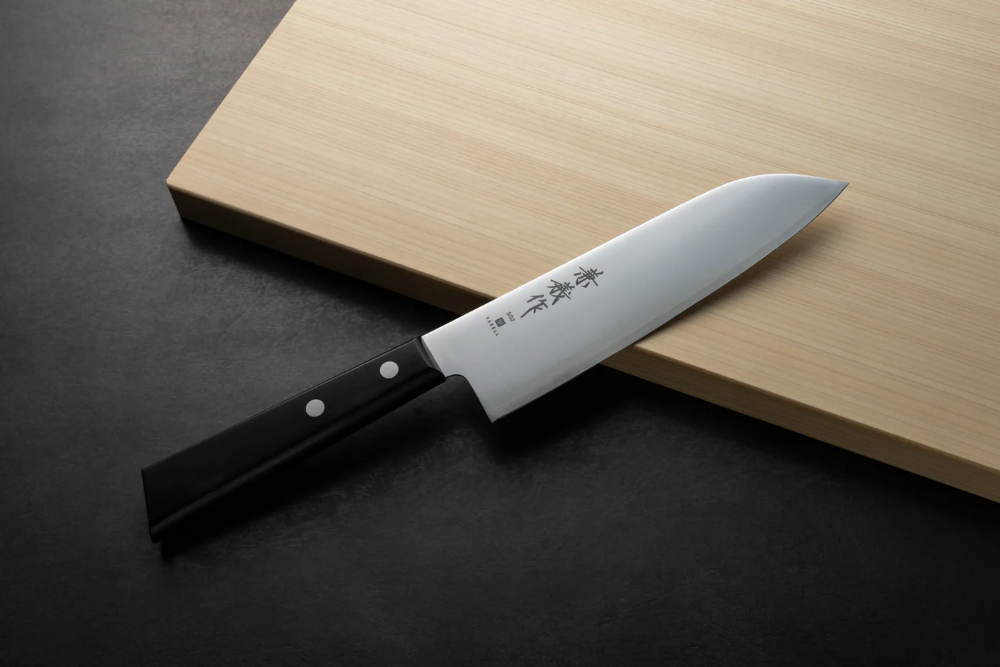
Santoku – Photo Credit: Japan Knife Toku
Santoku (三徳包丁) – The Home All-Rounder
Use: Meat, fish, and veggies
While not strictly a sushi knife, the santoku is a versatile option found in most Japanese kitchens. The name literally means “three virtues,” referring to its ability to handle meat, fish, and vegetables. If you’re just getting started with Japanese cooking, this is a solid beginner’s knife.
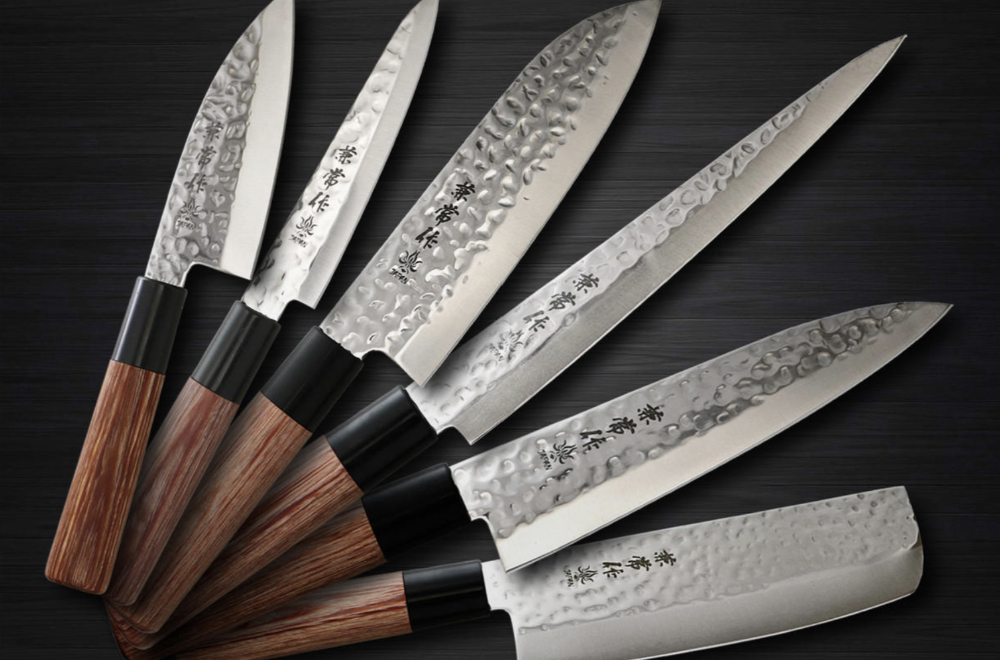
Collection of Japanese Knives – Photo Credit: Hocho Knife
Left vs. right-handed matters
Most traditional Japanese sushi knives are single-beveled, meaning they’re sharpened only on one side, typically for right-handed users. This design allows for more precise, cleaner cuts, especially in tasks like slicing sashimi. However, if you’re left-handed, this can be a challenge. The good news? Many high-end brands offer left-handed versions, but they’re often more expensive and harder to find. That said, investing in a knife that matches your dominant hand will drastically improve your control, consistency, and confidence in the kitchen.
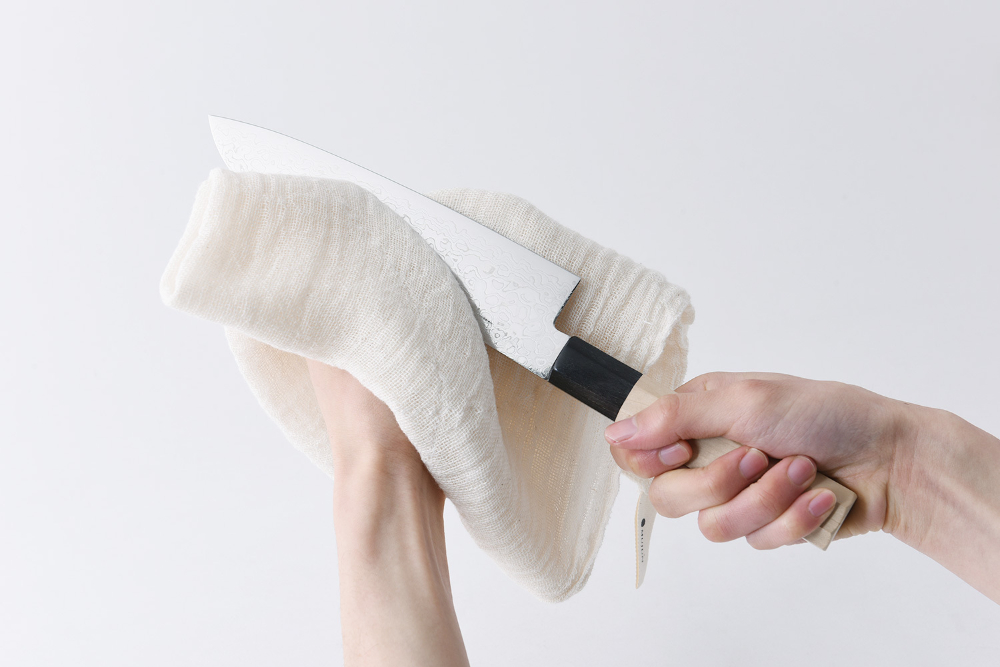
Cleaning a knife – Photo Credit: Mujun
Caring for your sushi knife
These knives are sharp, delicate tools, not something to be tossed in the dishwasher. Wash them by hand, dry immediately, and store them properly (preferably in a wooden sheath or knife stand). Regular honing and occasional sharpening with a whetstone will keep them performing like new. Take your time, keep the angle consistent, and your knife will stay razor-sharp for years. And remember, never use your sushi knife to cut frozen food, bones, or anything too hard.
Craft meets culinary skill
Japanese sushi knives are more than kitchen tools; they’re a blend of art, history, and culinary precision. Whether you’re a sushi enthusiast, an aspiring home chef, or just someone who appreciates well-crafted tools, learning about these knives can give you a whole new respect for the skill behind every slice of sashimi. And you might even be tempted to start your own knife collection.
Featured Photo by Robby McCullough on Unsplash
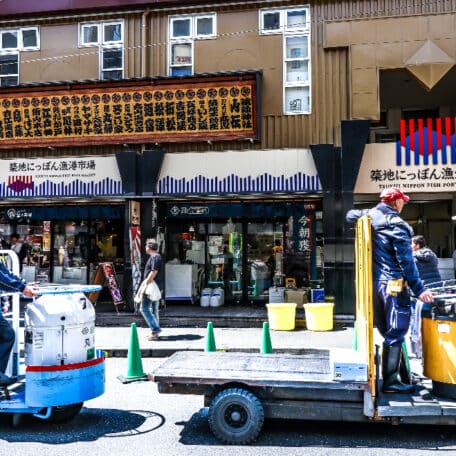
To acquire these artistically crafted knives, join our Tsukiji Breakfast Tour, where we will take you to the market frequented by sushi professionals.
PIN THIS FOR LATER
Book your pocket wifi now to stay connected through your entire Japan Journey!

Be sure to get the JR Pass to make navigating Japan during your trip that much easier!

YOU MIGHT ALSO LIKE